Lousy Lookers

Photo by KoolShooters on Pexels.com

It happened again today. A family member stood in front of the open refrigerator. Their eyes roamed about the shelves; they ducked down to see the lower levels. This went on for a few beats. Pretty obvious that they were looking for something. I knew it was coming. They looked over at me and asked if I had seen a bag of baby carrots. I went over, opened the veggie drawer, moved a bag of onions, and pulled out a bag of carrots.

The refrigerator is the worst place for the lousy lookers. “Do we have any __________” or “Where is the ___________” inevitably mean I will eventually have to get up and find it myself. Oh, they pretend to look. Open refrigerator and quickly look to the spot where they last remembered seeing the item. No matter that that was probably 2 weeks ago. And don’t actually move anything to look behind it in case–oh, I don’t know–someone actually used it in those last 2 weeks and put it back in a different spot???

But of course it’s not just the fridge. This search for missing items applies to food, clothes, dishes, utensils, glasses, car keys, paperwork, the list goes on and on.

How come I am the only one in my house who can find things? For some reason, my family thinks that I keep a mental catalog of every single item in the house, and that I can instantly tell them, at any given moment, exactly where that item is. I don’t, and I can’t. but I’ll share with you my secret for locating waylaid items:

Step One: I get up and look

Step Two: Sometimes I move things in order to look more

Step Three: I keep looking until I find it

Step Three is really the key. When I am convinced that something should be there, then I will not give up. Because the reality is that people sometimes move my shit. Okay, it’s usually only one particular person. He doesn’t like clutter. I get that. But sometimes I put something in a certain place for a reason. For example, I will sometimes place something on the floor by the door that leads to the basement. The reason is, that item belongs in the basement, but I’m not going down there this very minute. There’s a reason I’ve placed it there that may not be immediately understood by a passerby. It can be very frustrating when I am planning to go into the basement and I reach to retrieve my item, only to discover that it isn’t there. Now it’s my turn to ask, “have you seen my ___?” Usually the answer is “no”. And he’s not lying. He probably does not remember that a day or so ago, he moved my stuff and now he doesn’t remember that he even moved it, much less where he might have put it. So the search begins. And now I have to think like him. Hmmm, where would he have put a vase? A vinyl record? A seldom used small appliance? I start with the most obvious places and branch out from there, until . . . You guessed it. I find it.

And yes, I’m sure I sometimes move other people’s things as well. But I try to put it someplace obvious. For the kids, it’s usually right in front of their bedroom doors, where they would have to step over it (and yes, they will) to get past it.

And recently, the shoe was on the other foot. I was in the fridge, the black hole of missing items, looking for a container of grapefruit juice. Not being able to locate it was strange for a couple of reasons. First, it’s pretty large. Second, It’s unlikely that anyone else in the household would have been drinking it. I searched the shelves, moving things, even checking the crisper drawers, although it’s unlikely I would have put it there. No sign of it. I call out: “Where is my grapefruit juice?” A look of confusion from my family member. I resume looking, moving even items that I know have not been moved for weeks, making the likelihood that my grapefruit juice would have gotten behind them very unlikely. No sign of it. I even check the shorter shelves, where the container wouldn’t have even fit upright, thinking I might have laid it on its side. Nothing. Sensing my irritation, I get a suggestion that one of the kids might have drunk it. Ok, that happens. Frustrating, but not punishable by flogging. Yet I’ve never know either of my kids to drink grapefruit juice and I think it’s very unlikely, which I express.

Another suggestion from the couch: Could it be in the fridge in the garage?

Well, I think, I certainly did not put it there. Was he saying maybe he had put it out there to make room for something else? I do what I do best: I go and look. Nope. Now I’m back to the main fridge in the house. The fridge is not that big of a place to search. It’s not like my grapefruit juice is located somewhere else in the house. It’s either in this fridge someplace, or its gone. I finally concede: It’s gone.

I reluctantly begin to think of a second choice beverage option. But I was really looking forward to the grapefruit juice, so no, I have to give it one more try, and there! On the door shelf beside the milk, is a jug. The label is not the one I was looking for, but it’s backwards in the shelf and so I was seeing the back of the jug.

I happily go about pouring myself a glass. And somehow, the finding of the lost item is even more satisfying than the drinking.

See, persistence does pay off!

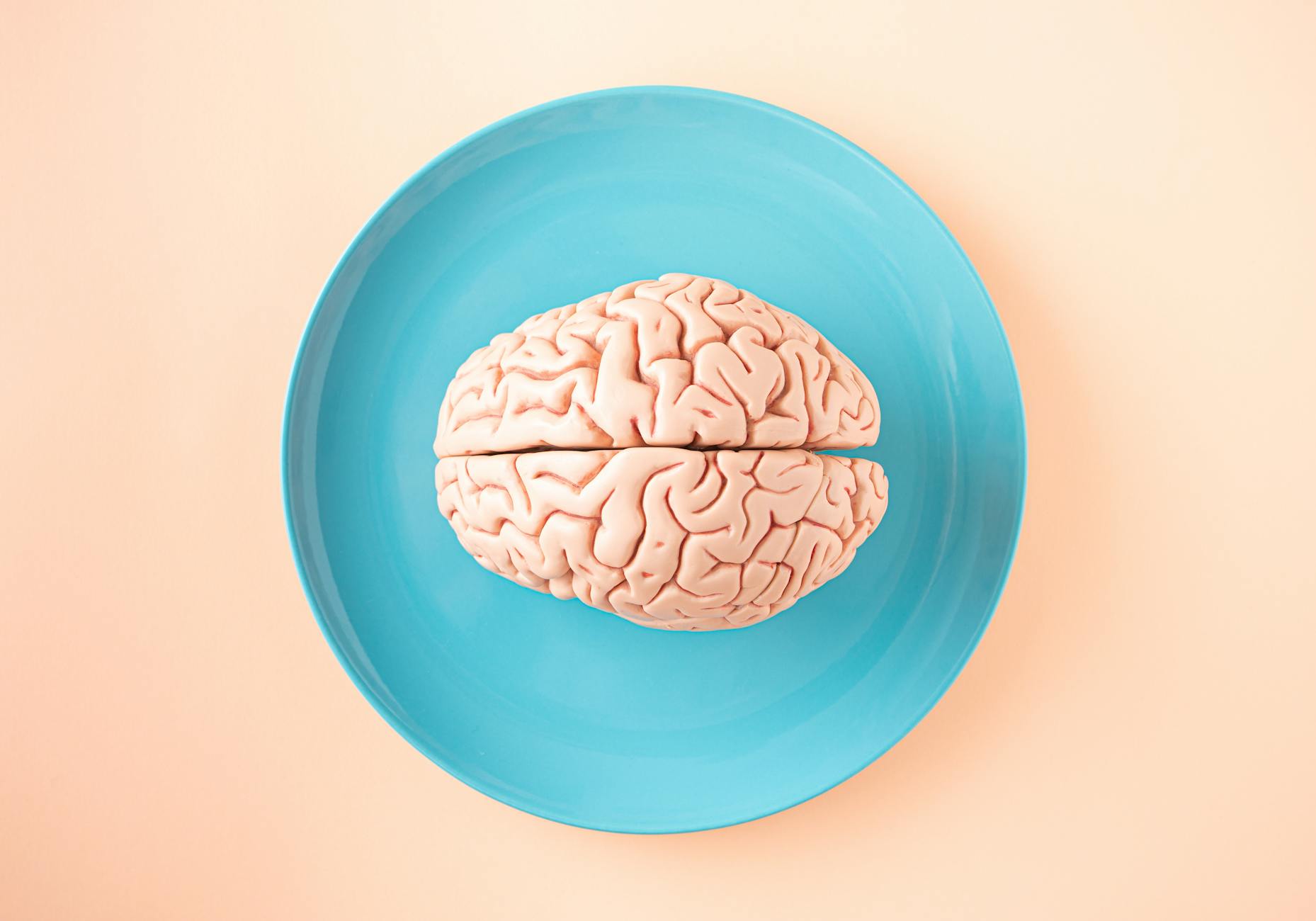
Maximizing Your Brain Power

Photo by Amel Uzunovic on Pexels.com

While you may have heard that we only use a very small percent of our brain–I’ve heard as low as 10%–turns out, that’s not true. Current thinking and studies suggest that most people actually use most of their brain. Imaging studies can see different areas of our brain being active during different functions or activities. While some portion of our brain is always active, by studying the brain during different types of activities, we can see that most of our brain is used in our daily lives. In fact, most of our brain is active during most of our daily activities.

Our brain is the most complex organ in our body. It weighs about 3 pounds and contains about 100 billion neurons that carry information to, and from, other parts of our body, at speeds of up to 250 miles per hour! The brain represents 2 percent of our body weight but uses 20 percent of our oxygen and calories. It is 73 percent water. The average brain generates 48 thoughts per minute. That’s almost one every second, and 70,000 thoughts per day!

Clearly, our brains are essential to our survival. Every single thing we will do today involves our brain: Motor function and coordination, taste, smell, sights and sounds, all of our thoughts and feelings, decision making and impulse control, functioning of all of our organs, both voluntary and involuntary, memories, and speech. So keeping our brains healthy should be a top priority. Our memory and cognitive skills actually begin to decline as early as our late 20s, so it seems pretty obvious that we would want to start as soon as possible to keep our brains functioning at top capacity, for all the years that we’ll need them. In addition to being necessary for the daily functions of our life, and being able to maintain our social connections, we also want to continue to learn and experience new things. A well-functioning brain will ensure we can learn new things, and learning new things will help to keep our brains healthy, so each reinforces the other.

Before we talk about what keeps our brains healthy, let’s talk about some conditions that can develop from an unhealthy brain. There are many types of irregular brain conditions. We often think of memory diseases like dementia when we think of brain health. Dementia is a broad term meaning decline in memory, language and problem solving abilities. Alzheimers is a condition and is the most common cause of dementia. There are numerous other conditions that are the result of a brain disorder, including ALS, autism, brain tumors, epilepsy, Parkinson’s and strokes. Some of these are present from birth, and aren’t the result of any actions on our part, while others develop over our lifetime, and may be facilitated, or exacerbated by our lifestyle. Strokes, for example, are often seen in patients with high blood pressure, obesity, smoking, and poor diet. All of these risk factors can be partially, if not completely eliminated with some healthy choices.

Brain Health is dependent on three main factors: Diet, Exercise, and Lifestyle. The good news is that these elements are also good for your body and physical health, so while you’re working on your physical health, you’re also strengthening your brain. Let’s take a look at why each of these is helpful, and what specifically we can do to maximize our brain health.

Diet:

Healthy eating in general will reduce your chances of developing diabetes, heart disease and high blood pressure, conditions that are known to increase risk for dementia. In addition, staying hydrated is very important for our brains. Remember the note above: Our brains are 73 percent water. Being dehydrated by as little as 2 percent can impair our ability to perform tasks requiring attention, memory, and motor skills. In addition to healthful eating, and staying hydrated, the following dietary elements may be beneficial to brain health:

  • Vitamin E and Beta Carotene promote brain health. For vitamin E, look for Fruits and vegetables with dark skins, such as spinach, broccoli, and blueberries. Leafy greens are also rich in B vitamins, which play a role in brain health. Those rich in beta carotene include red peppers and sweet potatoes
  • Oily fish, which contains omega 3s can help prevent brain shrinkage and support cognitive function. Seek out salmon, mackerel, and tuna
  • Walnuts and pecans are rich in antioxidants, which promote brain health
  • Dark chocolate and coffee have been shown to improve memory and brain performance
  • Caffeine can help perk you up, promote energy, and improve your focus

While no clear link has been established between certain vitamins and memory, the benefits of vitamins in general are clear. Most experts also agree that getting your vitamins from food sources is always preferable to a vitamin supplement. Supplements are not strictly regulated in the US and don’t have to prove that they work. Studies suggest they probably don’t, so skip the over the counter brain and memory boosters.

Exercise:

Regular physical exercise has been shown to boost the size of the hippocampus, the area of the brain involved in verbal memory and learning. Physical activity can also lower risk of heart disease, high blood pressure, and diabetes, all of which increase the risk for dementia. You can further improve your physical, and brain health, by mixing up your fitness routines, incorporating endurance, strength and flexibility exercises. This will not only improve your physical health, but the variety also keeps your brain sharp. Exercise will also help you reduce stress, and sleep better, both of which will keep your brain, and memory, healthy.

Lifestyle:

Aside from diet and exercise, there are other things you can do–or not do–that will benefit your brain health. Start by cutting out cigarettes and excessive alcohol. Smoking is a major risk factor for both dementia, and strokes. It can cause brain swelling, which may contribute to cognitive decline. Alcohol can impair the effectiveness of neurotransmitters in the brain, and also destroy brain cells. Alcohol can also increase your risk of mental health problems, and dementia.

Avoid multitasking. The brain can’t learn or concentrate on two things at once, but it can quickly switch back and forth between tasks and thoughts, so it feels like you’re successfully multitasking. In reality, doing so decreases your attention span, ability to learn, short-term memory, and overall mental performance. So when possible, complete one task before beginning the next. And if you know you need a relatively large chunk of time, schedule the task when you know you have a good chance of not being interrupted.

Stress and depression can cause brain shrinkage, and are risk factors for dementia. So try to reduce stress. I know, easier said than done! Meditation and deep breathing have been found to not only reduce stress and depression, but also to improve memory and attention. Cultivate relationships with the people in your life who are positive and who make you feel better about yourself, and your life. Social contact can provide a sense of connection and purpose, and just the act of conversation forces your brain to use language and vocabulary skills, further sharpening your brain. Spiritual activities such as religion, meditation and practicing gratitude have similar benefits of purpose and support and offer the same benefits as your social interactions.

Other ways to reduce stress include volunteering, and getting outdoors. Helping other people, and getting in tune with nature, are calming, feel-good activities. And don’t be afraid to ask for help. Delegate tasks if you’re feeling overwhelmed. Whether at work, or at home, there is likely someone who is willing, and able, to help.

Lastly, to reduce stress, don’t forget the best medicine, laughter! Sources of laughter can be found everywhere, including your personal friendships, a YouTube video of silly animals, or a live or recorded comedy skit. Counseling can help many of us to reduce stress. It’s good to share feelings of anxiety with someone who is not only objective, but also trained in ways to help you cope. And always seek counseling if you feel your stress, sadness or depression, has gotten worse or is seriously affecting your life.

Get enough sleep. Lack of sleep can affect your mood, energy, focus, and overrall function. In addition, memories get cemented while you sleep, so getting your 7-9 hours will help you to recall those important facts when you need them.

If your goal is to keep your brain sharp, there are strategies to improve those odds. Games are a good way to challenge your brain, and keep those neurotransmitters firing. Try crosswords, puzzles, crafts, sodoku, playing cards, and books. Studies have shown that those who used brain training exercises decreased their risk of dementia by 29 percent. It doesn’t have to be a scientifically created program. Just challenge your brain in as many different ways as possible. We’ve all had days when we drive to work, and can’t remember the drive at all. That kind of programming is not creating the new pathways that are beneficial to our brains. So your brain training doesn’t have to be superchallenging. Just shake up your daily routine with small changes like taking a different route to work, making a brand new dish for dinner, or reaching out to a friend you haven’t spoken to in a while. It should go without saying, that screentime, and in particular, social media, do NOT challenge your brain. So limit the scrolling and pick up a book, or invite your besties or family for a game night.

Most people get worried about their memory as they age. A declining memory is definitely a reality of aging, and most times is not reason for concern. Forgetting someone’s name, or why you went into your bedroom, are normal, especially as we get older. Speak to a doctor if you, or a loved one, is unable to remember the purpose of objects–like what a hairbrush is used for, or if you’re getting lost while walking or driving in an area that should be familiar–or if its affecting your ability to complete daily chores, like taking longer to complete a task that involves multiple steps. If you realize your memory issues are normal, and not signaling a more serious condition, there are some ideas you can try to improve your ability to remember, particularly in a certain area like an upcoming test, or wanting to better remember people’s names when you meet them:

  • Use images to remember facts; our brains process images faster than words, and making it silly will make it easier to remember; example: To remember the last name Rosenfield, picture the person running through a large field surrounded by rose bushes
  • Use an acronym, like RoyGBiv (the famous acronym to remember the colors of the rainbow) or use a silly phrase: To remember multiple people you met at a party: Richard, David, Sally, John, Savannah: Red Dogs Seem Just Super
  • Say it out loud: If I say, I am putting my keys on the dresser, out loud, I’m more likely to remember that later when I’m looking for my keys; better yet, tell someone else
  • Write it down or draw a picture

Our brains are vital to all facets of our lives and keeping them functioning at peak capacity will ensure that we can live our best lives. There are many things you can do every day to improve your brain’s performance, and keep it running in top condition and for the most part, the best practices for your brain will also benefit the rest of your body, and will lead to a healthy, active life for all the years to come.
Wall Pilates: Cardio and Strength Training Benefits

Photo by Anna Shvets on Pexels.com

I’ve recently started a Wall Pilates workout. Although I’ve experimented in the past with many different types of workouts: strength, cardio, aerobics, walking, running, yoga, etc, I had never tried Pilates. I think I always viewed it as something requiring a lot of flexibility, and I’ve never been very flexible. But I’ve been seeing Wall Pilates workouts and testimonies a lot lately, and it intrigued me as something that seemed doable, and that could lead to results. One of the aspects that really appealed to me, was that it seemed to incorporate both strength training and cardio, so I was very interested to see if that really was the case.

Wall Pilates is a slightly different version of traditional Pilates, which was created by German physical trainer Joseph Pilates in the early 20th century. Pilates’ goals are core strength, stability, and flexibility, and focuses on breath, cervical alignment, rib stabilization, pelvic mobility, and abs. Wall Pilates has the same focus. Pilates is practiced worldwide and is practiced by over 12 million people.

I’m not someone who goes on an exercise plan and then abandons it after several weeks. I’ve been a faithful, consistent exerciser for over 25 years. It’s essential to my life and I always make time for it. The level and variety of my workouts has definitely changed over the years. Prior to having kids, I could have hour-long strength training workouts focused on a limited number of body parts, multiple days a week. Twenty years later, my workouts are shorter, and less intense. Sometimes I’ve focused more on cardio, and other times, more on strength training. And I do like to change things up. I think novelty makes things more interesting and experts agree, it’s good to have variety and also to challenge your body in new ways.

I’ve never had a gym membership but I’ve built up enough equipment in my basement to tackle most programs. It doesn’t really take much. You could probably create enough of a challenge, and have the ability to change things up, with three or four sets of dumbbells. I also have a yoga mat, some resistance bands and ankle weights. In the past I’ve used a weight bench, barbell and free weights, but that’s not part of my routine these days. And, of course, my most important piece of equipment is YouTube. Regardless of your fitness level, or the type of workout you’d like to try, there is a video out there to guide you.

So I was excited to try Wall Pilates. As a complete beginner, I knew I would need some help getting started, and, as with most exercise programs, there are many ways to help you take the leap. Wall Pilates is no exception. There are books, apps, gym classes, and videos. While many options require a paid membership, or subscription, lots of free options do exist. Although I have always been opposed to paying to exercise, I realized I had no idea where to start with my new Wall Pilates program, and decided to purchase an app, Yoga Go, which costs about $15 a month. I also used Rachel’s Fit Wall Pilates, a free program available on YouTube.

The Yoga Go option was designed specifically for me. I answered some questions when signing up as to my preferences for workout length, fitness goals, current fitness level, and comfort level with Pilates. And I could respond each day to how I felt about the workout. Responding that it was “easy,” would mean a slightly more difficult workout the next day. I really liked this feature. Rachel’s Fit Wall Pilates gave me the opportunity to dive right in with the Day One workout. Both options advertised a 28 day program, which I thought was a good amount of time to see if I liked the exercises, and if they yielded results. In my case I was looking for some toning in my abs, glutes and thighs, with some ability to get my heart pumping, and was also looking for some lower numbers on the scale.

Requirements were simple: A yoga mat and some clear wall space. You do need a decent amount of wall space as some moves are done with your back on the floor and feet on the wall, and others are done standing, with your back against the wall. I set up in my basement and needed to remove a couple of framed photos from the wall in order to leave space for full movement. Both Programs offer good video, with verbal instructions for moves, which is good, because most of the moves were not familiar to me. I found Rachels Fit Pilates to offer more down to earth explanations, enabling me to sometimes figure out a move just by listening. But I also viewed it on my laptop, which meant that if I needed to look at the visual, I could see better than the Yoga Go app which was on my phone. I often needed to pause both versions–but Yoga Go in particular–to allow time to move between positions and figure out the mechanics of the next movement. The Yoga Go phone app workout also required me to move the phone occasionally as the workout progressed, depending on whether I was doing a move standing up versus lying on the floor. That was a little cumbersome. Another feature of the Rachels workout that I really liked, was she often showed a basic version of the exercise, and then a more challenging version, so you could adjust the workout to fit your fitness level, or your energy level on that particular day.

Neither option offered broader advice, like how often should I workout, and when, and should I alter my diet? It’s possible that that information is available somewhere in the programs, but I was not able to locate it after a quick search, and it never came up during the actual workouts. I would have appreciated something like that. I’ve always been a firm believer in rest days, and my schedule does not really allow for a workout every day. I had the impression that the 28 day programs were every-day-for-28-days which surprised me. I continued to take off days while I worked through both programs. I did complete 28 days of both programs, but it did take me longer than 28 days to accomplish that.

I like that the workouts are short, most in the range of 15-20 minutes, which allowed me to double up on some days, doing both the Yoga Go and the Rachels. Or I sometimes added a walking workout to one or the other of the Wall Pilates workouts. I also added in an occasional upper body dumbbell workout, as I felt the Pilates didn’t emphasize this as much. Rachel’s Fit did incorporate one or two days of light upper body moves with weights, but Yoga Go never did. I did often feel sore the next day, particularly with more lower body workouts, and I was sometimes out of breath, more from the strain of the movements than from high energy movements. I did find some of the moves to be challenging, both in the mechanics, and in the sheer muscle and flexibility components. If you were just watching the video, it would look easy and not very challenging, but the completion of the moves was more strenuous than I expected.

I would definitely say that there is a strength component to Wall Pilates, which is most often done with only your body weight for resistance. If you think body weight alone can’t garner results, do a few pushups, and then let me know what you think! Pushups are generally considered to be one of the best full body strength builders out there. But I agree with most experts, who say that if you really want to build visible muscle, you will need to incorporate weight bearing exercises into your daily routine. But make no mistake, Wall Pilates is still a workout. I often struggled to complete the repetitions, and felt soreness the next day. You may not be entering a bodybuilding competition following completion of the program, but it WILL build muscle, so it can change how you look. .

Cardio? While Pilates is not high impact aerobics like running or jumping, it does still improve cardiovascular health by raising your heart rate and lung capacity. When your exercises pick up the pace, or require more stamina on your muscles, you are also working your heart. I frequently found myself breathing hard even though I was performing slow movements. In addition, the slow, fluid movements and focus on breathing and proper form, can be relaxing and lead to reduced stress, which is always a win.

Pilates and Wall Pilates are easy on joints and limit risk of injury. As with any strength exercise, proper form is important, so go to a class with an instructor, or watch a video to be sure you’re maximizing your benefits and minimizing injury risk. Pilates includes a lot of stretching, which can improve your flexibility and range of motion. If you’d like to test this theory, pay attention to your flexibility as you begin the program, and then check it at the end to see if there has been improvement. One simple way to do this is with the old standby of reaching to touch your toes. Pilates is a great workout to try if you’re a beginner exerciser, recovering from an injury or an older adult. Or if you simply prefer less intense workouts.

After completing both programs, I did see some toning. Nothing drastic, and no real weight loss, but to be fair, I did not alter my diet at all, which I’m sure would have resulted in more noticeable results. I think the most telling factor is that I’m going to continue working the program, albeit selectively. The Yoga Go program will continue to get more challenging as I rate each workout, and with Rachel’s Fit, now that I’ve completed the full 28 days, I can go back and choose which workouts to do, so if I want to focus more on abs, I can do that particular workout for a period of time. I do still hope to have continued results with toning and improvement in flexibility and balance, as these are functions that can be beneficial in performing all of our daily activities. And I’ll continue to add in other types of workouts, and try new things that come along, so I never get bored with exercise, which is such an important factor in my life.

Basics of Estate Planning: Part II, The Will

The Last Will and Testament, more commonly known as just “The Will,” is at the heart of the Estate Planning process (see prior segment of this series “The Basics of Estate Planning: Part I, Everyone Needs It”). The Will is the first document people think of, and typically the first document they complete as part of the larger task of Estate Planning.

But first, my disclaimer: I am NOT an attorney, but I have been exposed to all of the different pieces of the Estate Planning Process through my career as a Banker, and so I have a good understanding of the purpose of each, and have also seen where some pitfalls can occur. In addition, through my research, and the completion of my own Personal Estate Planning documents, I have learned a lot about the importance and significance of each, and am able to offer explanations and recommendations for anyone who would like to tackle this necessary task on their own.

Your Will is a document that will direct how your property and assets will be distributed upon your death. If you have minor children, your Will can also dictate your desire for guardianship of their care, and their finances. Experts say as young as age 18 is the time to start thinking about preparing a Will, especially if you own significant assets or have children. A Will can easily be completed without requiring an attorney, but more complicated situations will require legal advice. Keep in mind that an attorney will not–and should not–tell you what to do. You tell them what you want to accomplish and they will help you prepare the paperwork to make sure that happens. Some of the situations in which you should consider professional legal help include:

  • You fear a lawsuit, or think your wishes might be contested
  • You own multiple properties or multiple businesses, especially with complicated ownership
  • You have a lot of assets, or high dollar assets (over 1 million)
  • You have out-of-state, or international assets
  • You want to protect your assets from estate taxes, creditors, or potential medical expenses
  • You have complicated child care concerns
  • You live in a Common Law State and are unsure how these laws apply to you

Each state has different requirements in terms of what will be considered a legal Will and also may handle situations differently regarding after-death processes. Do your research for state-specific requirements and always consult a state-sponsored website for your particular state. To find these, go to http://www.findlaw.com, click “state laws,” choose your state, and click “Estate Planning Laws.” Your state’s site may even have some sample documents available for you to review.

In most cases, the legal requirements for a Will are very basic.

  • It should be typed
  • You must be at least 18 years old and of sound mind
  • You must name an Executor, and at least one beneficiary
  • The document must state that it’s your Will
  • You must sign and date your will and have at least two individuals sign as witnesses

Most states do not require that your Will be notarized, but as always, check your particular state for legal requirements. Having your signature notarized is usually a good idea, even if it’s not required. Your bank will likely have a notary available for you.

A Will can be very basic, or very complicated, but all cover the same components. Here are the basic sections of the Will and what each element consists of:

  • Personal information/sound mind/replaces prior wills-Includes your legal name, address, marital status, and listing of children, or grandchildren; a statement that you are of sound mind, and that the current document replaces any prior versions of a Will. Example: I, John Smith, of 100 Springs Lane, Anytown, Sonoma County, CA do declare this to be my Last Will and Testament and replaces any prior versions. I am of sound mind, and I am married to Joanne Smith, and have one child, Joseph Smith, both of whom reside with me.
  • Naming of Executor; In most cases, an executor will be named. This is sometimes referred to as an Administrator, or a Personal Representative. Naming an executor may not be required in your state, but it is always a good idea. This is the person who will carry out your wishes, and manage the disbursement of your assets upon your death. Naming an executor will make the probate process easier, and even if your Will does not need to be probated (because you have taken other steps to ensure your property passes to someone else upon your death), a Court appointment as Executor will come in handy for those trying to manage your affairs. Something as simple as a cable bill that is in your name alone will become a nightmare when your family members attempt to obtain information, or even close the account, following your death, if they do not have an official court document. See Future Installments of this Estate Planning series: Avoiding Probate and Guidelines for Your Executor. Example: I name Susan Smith, of 123 Vineyard Lane, Anytown, CA, as my Executor.
  • Distribution of Assets/Residuary clause-This is a listing of your assets, and your beneficiaries; when determining amounts for assets that are to be split among different beneficiaries, use percentages instead of dollars; List beneficiaries, and alternates, and a residuary clause that includes the person or persons who will receive anything that is not specifically listed in the Will. In the case of numerous assets, a “Property List,” might be helpful; Example: I leave all of my assets including my home at 100 Springs Lane, my bank accounts, and my personal possessions, to my wife, Joanne Smith (40%), and my son, Joseph Smith (60%). If either of them predeceases me, the other shall inherit all assets. My residuary beneficiary will be Joanne Smith.
  • Handling of children, if applicable; Example: Upon my death, and in the event Joseph is a minor, I direct that his personal and financial care, shall be in the hands of his mother, Joanne Smith.
  • Survivorship clause: to ensure your Will determines who inherits your assets, and not the beneficiary’s will; in other words, if one of your beneficiaries dies immediately after receiving proceeds from your Will, those assets would then transfer to that individual’s beneficaries, as opposed to another of your beneficiaries; typically this waiting period is 5 to 60 days. Example: Beneficiaries must survive me by 30 days in order to inherit.
  • Signatures/Witnesses/Notary; You will sign and date, have 2 witnesses sign and date, and have all signatures notarized.

The example phrases in the above, could be put together in a single document to complete a very basic Will. Most Wills are a little more lengthy, as they may involve multiple assets and beneficiaries, but in some instances could be as simple as one page. In addition to the basic components, your Will may also express your wishes for Funeral Arrangements and Memorial Services. This kind of information is also sometimes outlined in a separate document (For example “Final Arrangements”).

Most times, upon your death, your Will will need to be probated. This is a legal process where the Personal Representative is officially appointed by a local court, as the representative of your estate. This is important because most places, like banks, will not recognize the Will as a legal document to grant the PR the authority to manage the deceased’s finances. The person named as executor in the Will would complete an application (generally referred to as a “Petition for Probate”) and will provide the application along with an original copy of the Will and the death certificate to the Probate Court in their state. The court will “prove” the Will–verify it’s a legal Will– and then will appoint the Personal Representative. The Court will also appoint guardianship if there are minor children. The PR will receive a legal document that gives them the ability to act on your behalf for any property that has not otherwise been designated (for example with a Trust or joint ownership). The court appointment document is also important for managing any affairs that don’t involve assets, like accounts for cell phones, or utilities. The PR appointment does not grant anyone legal ownership but gives the appointee the ability to act on behalf of your Estate. 

In the absence of a Will (Known as dying “intestate,”), the Court will likely attempt to appoint the nearest living relative as PR, a spouse being the first option. The court won’t go looking for individuals, however, so in the absence of other applicants, the court will likely appoint any applicant with a close relationship to the deceased. As this may not have been the person you would have chosen, it’s best to make this clear by completing your Will as soon as possible. In the absence of a Will, the court will also determine how your assets are distributed, using a predetermined hierarchy.

You may have heard references to a Will being contested. This is a rare occurrence but could happen if the legal requirements of preparing a Will are not met. Other reasons a Will is vulnerable to being contested include the author being pressured to put certain things into their Will, lacking a sound mind, or possibly something fraudulent, for example a forged signature. Proof would need to be provided to substantiate any of these claims.

As with all of your Estate Planning documents, the Will should be reviewed regularly, and updates made as your situation changes. Every couple of years is probably sufficient unless you have a major life change like marriage, divorce, or new children. In addition, it’s a good idea to let someone know where your Will is located, or even to provide a copy to anyone you think should have it, in particular, your Executor.

Your Will is a very important piece of your Estate Planning Process, and you are never too young to start working on this document. While it’s not always a pleasant topic to tackle, having your instructions and wishes written in a formal, legal document, will make things much easier on the loved ones that you leave behind.

Defeating Self-Criticism

Photo by RDNE Stock project on Pexels.com

There’s a lot of negativity in the world. Every day, you are likely to run into someone who is complaining about something, or criticizing something. And it’s not just the stranger in front of you in line at the grocery store. You may have people in your life who are prone to always seeing the glass as half empty. You might even avoid them, when possible. You can’t control what other people do or say. You can only control yourself. And even that is often very difficult. 

One of the hardest things to control is your own negative thoughts about yourself. We all have them. That inner voice that tells us we screwed up, or we’re not good enough. Maybe we didn’t handle that situation at work properly, or we didn’t do enough to prevent our kids from making mistakes, or maybe we don’t even like the way we look. Social media has only compounded these feelings. Every day we see people who appear to be having more fun, getting better jobs, enjoying better relationships. It’s likely not true, of course. Or at least not the complete picture of another person’s life. Social media posts only show what people want us to see.

Every person, no matter how successful, or well-liked, has their strengths and their weaknesses. Their positive qualities and their not-so-positive qualities. Their happy moments and their insecure moments. This is something that we all have in common. But if you find that your negative thoughts about yourself are outweighing the positive ones, it may be time to make a change.

So why do we beat ourselves up?

As with many characteristics, genetic predisposition may play a role. There is some evidence of an “optimism” gene, and studies have shown that those who don’t possess it were less optimistic, had lower self-esteem, and felt less personal mastery. If you recognize this tendency to believe the worst about yourself, you might also recognize it in one, or both, or your parents.

Of course the other element is environment. You may have witnessed self-critical behavior from others who influenced you when you were younger. And if you also had someone criticizing you from a young age, then you may have grown to believe their negative impressions of you.

Some people believe that criticizing themselves will motivate them to do better. After all, if we never tell ourselves to do better, then we’ll just end up being lazy and unproductive, right? But no correlation has been shown to exist between criticism and success. In fact, the opposite is true. Results often improve when people talk positively to themselves, as opposed to negatively. People who are successful have succeeded through hard work, talent, and determination, not because they were self-critical. 

Sometimes people are self-deprecating because they don’t want to appear to be bragging. They think knocking themselves down makes them seem humble. This, of course, is silly. Sharing a positive moment about yourself with friends is very different from always telling everyone that you’re the best at everything. Letting your friends congratulate you on your successes leads to positive feelings about yourself which can lead to further efforts and successes and becomes a self-fulfilling positivity circle.

Lastly, sometimes self-critical thoughts could be due to a past trauma. Seek professional help if you feel your self-criticism is causing frequent sadness, anxiety, and consistent feelings of being overwhelmed and not wanting to make an effort, or feelings of shame, or guilt, or thoughts of harming yourself.

Why is self criticism unhealthy?

At its worst, self-criticism can lead to feelings of low self-esteem and possibly even anxiety, depression, and other mental illnesses like eating disorders and self-harming thoughts and activities. At best, self-criticism may stop you from trying new things, or from trying something a second time, following a mistake. Intellectually, we know that mistakes are the way we learn, but if you dwell on a mistake and are unable to try again, or to move past it, you might never get to experience the joy of getting it right. It might immobilize you and make it hard to move forward, if you’re convinced you’re going to fail. Self-criticism can hurt your relationships. You may find yourself withdrawing from friends and situations if you always feel inferior or like you will do something wrong, or if you feel like you don’t really bring any value to the group or gathering. Most of us like being around positive people, so if you’re the negative nellie in the group, your friends might pull away from you as well. 

But how do we stop?

For most of us, self-criticism is not so much a personality trait, as it is a habit. The good news is that habits can be broken. This is something you can start now with no therapy, cost, or much time involved. Over time you can teach your brain to automatically make this shift. Replace that bad habit with a good one.

The first step is to recognize a negative thought and stop it in its track. Be mindful of the thoughts flowing through your brain. As soon as you become aware of negative self-talk shift your focus elsewhere, perhaps by reminding yourself of your good qualities, or something you did recently that you’re proud of or that helped someone else. If you can’t think of anything immediately, ask a loved one to share something they think is a positive quality about you, or start keeping a journal of positive memories from your day that you can refer back to when you need a self pep talk.

If you’re really stuck, let someone else do your self-love talking. I recently starting listening to some meditation at night before going to sleep. There are an infinite number of options for this, and I’m always listening to something different. Some of the sleeptime meditations focus on relaxing your body and making it easier to sleep. Others offer visualizations that help you focus on happy times, or maybe on something you wish would be different in your life. A new one I listened to recently began like this: ”You are a wonderful, amazing person.” I giggled a little at first, but then I started to really enjoy this little bedtime pep talk. This could spur you to come up with your own ways to affirm the goodness that is you. 

A mantra might help. One of my favorite mantras is “Doing something is always better than doing nothing.” So if you do find yourself stressing over the way you handled a particular situation during your day, redirect by saying, okay, what can I learn from this scenario? Or, what can I do to move ahead positively to either make the situation better, or to prevent it from happening in the future? Then take action. Making steps to improve yourself will always make you feel better.

Practice self-compassion. This is sometimes thought of as being self-indulgent. But it’s more about not being so hard on yourself. Talk to yourself like you would talk to a good friend. In a supportive, loving way. What would you tell a good friend who shares a situation with you that left them feeling stupid or incompetent? You would likely assure them that it’s not as bad as it seems, that they handled it well considering the circumstances, and that most mistakes are fixable. Maybe you would even brainstorm some ideas to move forward.

Taking time for yourself is also important. You probably spend a large part of your day doing things for other people: Laundry, meals, tasks assigned by your boss. Possibly you are the person many come to when they have a problem or want to vent. Devoting time to yourself is equally as important. Schedule it. You can enjoy the things that are going well, and focus on what you want to do next. Take time to do your favorite things–read, meditate, exercise. Being kind to yourself will make you a happier person, and that positively affects all other areas of your life.

Make a list of qualities that you like about yourself. When someone compliments you, don’t say “Oh, I didn’t do that very well.” Instead smile, and say thank you and enjoy the moment, and add it to your list of positive qualities.  Don’t expect perfection. Be realistic. Congratulate yourself when you’ve done something well, or taken a positive step toward achieving a goal. 

Live according to your life’s purpose. If you’ve never thought about it, take some time to define it. What do you want to accomplish? Where do you want to make a difference? How would you want to be remembered? Think of it as your personal Mission Statement. Write it down. When you feel like you’re floundering, refer back to your mission statement and remind yourself of what’s important. Don’t be afraid to take risks and work toward the things that are important to you.

Some minor changes to your internal thoughts can have a big impact on your life. Most things are not life or death. Most things are fixable. It’s okay to not be great at everything. Being kind to yourself doesn’t mean you don’t want to improve. Quite the opposite, it will give you the confidence to take the steps that will enable you to get to where you want to be.

Think about the people in your life that you love. They’re imperfect, aren’t they? So why not also love the wonderful, amazing, imperfect person that is you.

What I’m Reading Now: The House Across the Lake

Photo by Daniel Spase on Pexels.com

Book: The House Across the Lake

Author: Riley Sager

Fiction/Nonfiction: Fiction

Have I Read this Author Before: No

One sentence summary: A mostly has-been actress with a drinking problem moves to her childhood summer home on Lake Greene where her husband drowned the year before, and gets caught up in the mysterious disappearance of her neighbor.

Did it Make Me Want to Keep Reading: Yes, there were multiple possible scenarios and I wanted to find out which was the reality; the writing was clear, and intelligent.

The Best Thing About the Book: The writing is straightforward, very readable, and creates suspense. There were several possible outcomes and I found myself changing my theories.

The Worst Thing About the Book: The story does alternate between the past and the present which occasionally caused me to flip back and forth at times to remind myself what happened when, but I don’t hate it completely as it also sets up one of the most interesting twists.

What I Learned: A little bit about police procedure and the difficulties of evidence obtained illegally.

The Bottom Line: An interesting, compelling read with a Twist you won’t see coming. 

Would I read this Author Again: Yes, I enjoyed this and look forward to the next one!

Next Book to be Read by this Author: Survive the Night

How to Have a Merry Christmas

Photo by Lisett Kruusimu00e4e on Pexels.com

If you don’t celebrate Christmas, substitute whichever holiday you do celebrate. And even if you don’t celebrate any of the various special days happening around this time of year, hopefully you still enjoy some of the atmosphere all around us. After all, it’s a happy time, and everyone is in a good mood. 

Or are they? This year I’m finding that people are not particularly enjoying their Decembers. I see it every day in my day job. People are a little cranky, complaining about minor things, being a little more demanding, a little more unreasonable. It’s the same out in the world. Drivers beeping behind you. People being inconsiderate in stores. It can be a bit of a downer.

Some things about the holidays are stressful. I get it. I can understand mixed feelings regarding shopping, and gift-buying. I can even understand not enjoying all the work involved in decorating, baking, cooking But I hope you can find something to enjoy about the holidays. Maybe you’re finding it hard to be Merry this year. With just one week left to the Holiday that I celebrate, I have been thinking about how I can make the most of this time to remember the good things about this time of year; to celebrate without making myself crazy, and to create memories. I thought I would share my thoughts with you on ways to make this season more enjoyable. 

Relax

It will all work out in the end. Hopefully you’ve never had a bad Christmas. I’m happy to say I haven’t. Your holiday won’t suffer if there’s one less decoration, one less batch of Christmas cookies, one less stocking stuffer. So take these last few days to go easy on yourself. It’s okay to say no, to sit down with your family and watch a sappy movie, to just decide that you’re done shopping.

Make the tasks more fun

If there are still a few things that you really must do, think about how you can make it more fun. This could mean grabbing a friend when shopping, baking or wrapping. If crowds bother you, try shopping later at night when it will be more peaceful. Put on some music that makes you happy, grab your favorite beverage while wrapping. These tasks can be just another chore, but throw in some company, music, maybe a little eggnog, and it can be an enjoyable experience.

Simplify the gift giving

Lately I’ve been giving experiences as gifts to my family members. This year my mom will get a certificate for “dinner and a movie” that I will treat her to in the future, and my daughter is getting a day of lunch and shopping for a new coat. One bonus: We get to spend time together! I didn’t have to leave the house for these gifts and I spent about 2 minutes typing up a cute certificate. Another bonus: I put off the expense of the gift to a future date which makes my Christmas spending a little lighter.

Enjoy the Lights

Start in your own house. You likely have a Christmas tree or hanging lights, maybe even some outside decorations. Position your chair so you have a good view, grab a cup of hot cocoa, and just sit and look at some lights. There are many spots now to go and view spectacular light displays, and these are fun and a good way for some family time. But it’s not necessary to spend money. Hop in the car and drive around town to view some great lighting. I belong to a local Facebook group that posts impressive displays, so when we set out I usually have some addresses at the ready. You can probably locate something similar for your area.

Spend some casual time with friends

The parties are great and we have a couple that we attend every year. I look forward to them and they’re always a lot of fun. But a casual get together can be just as rejuvenating. My besties and I recently got together at a restaurant with very little notice and it was a great time. No one had to cook or prepare anything. While we were together there were no obligations or to-do lists, just love and laughter with people who make you feel good.

Spend some time alone

It’s ok to be alone and just. . . do nothing. Grab a book, a cup of tea, take a bath, whatever works for you to decompress. This weekend I had a busy day of shopping and cooking and knew I needed to get ready to attend a party, but I just needed a half hour or so to wind down. I grabbed my book and climbed into my bed and just escaped into a world where I didn’t need to do, or worry about, anything. Just 30 minutes and I was ready to jump in the shower and tackle the rest of my day and evening. Avoid the phone or other devices. You probably already know that scrolling is not the best way to wind down. 

Listen to music

I know not everyone loves Christmas music, but I do. I find the radio station that starts playing it as soon as possible and I’ve got it on in the car through November and December. If you don’t care for it, or get sick of it after a couple of weeks, listen to any music. If you need to relax, put on something mellow, and if you need a pick me up, put on something more upbeat. Grab someone in your family and take turns picking songs. My kids and I have recently been buying some vinyl, so we listen to that together. Music is such a healing medium.

Prepare a Healthy Meal

The holidays are filled with treats and sweets and intricate, heavy foods. And it’s delicious! But it you’ve been trying to eat healthier, it can be a little and you may suffer from the “morning after” regrets. So prepare a light, healthy meal that will get you back on track and make you feel better about the cheat events you already had and have yet to come.

Pass it On

The good feeling I mean. Maybe you helped someone less fortunate this holiday season. If so, stop for a moment to reflect on that. Someone’s holiday is more enjoyable because of your thoughtfulness. If you had been thinking about it participating in a giving program but time got away from you and it didn’t happen, there are still ways to help. It’s probably too late to buy gifts for a struggling family for Christmas, but there are needs all year long. Drop some food off to a food pantry or find a good program in your local town that you can get involved with after the new year. And being kind doesn’t have to involve material things. A smile, a kind word, a compliment can also make someone’s day. A phone call to a friend or family member you haven’t spoken to in a while. A handwritten Christmas card, or note. I know most people don’t send Christmas cards in the mail any more–I haven’t for years–but the handful that I received this year did brighten my day. These small gestures will not only brighten the day of someone else, but will also make your day more enjoyable as well.

I hope you enjoy the rest of your Holiday Season!

Basics of Estate Planning: Part I, Everyone Needs It

In my many years as a Banker, I’ve seen bad situations of individuals who did not do any Estate Planning. They leave behind accounts that no one can access, and a family that often does not know what they have, where it is, or how to go about distributing it. Worst of all, they don’t know what their loved one’s wishes were. Often people tell me they don’t really own anything significant, so they don’t need to plan for what will happen upon their death. “I don’t own a house or have any children, so there’s nothing to inherit and no one to leave it to.”

I am not an attorney, and therefore cannot offer legal advice. For complicated situations, or specific legal questions, you should always seek legal counsel. This is just some guidance as to what I’ve learned over the years. I’ve seen what can happen when someone dies without having done any planning, and I can see how things move much more smoothly when an appropriate plan has been implemented. This is part I of a series, so let’s begin by talking about why it’s important for everyone to think about Estate Planning.

Estate Planning is a fancy phrase that simply means ensuring that things will happen as you want them to when you die, or if you become incapacitated. This involves passing on property, determining wishes regarding children or others dependent on you, stating burial and memorial service wishes, and making wishes known regarding what happens if you can’t make decisions for yourself. Putting your wishes down on paper also makes it much easier for the people you leave behind to get through what is likely to be a difficult period. Mourning is hard enough without also trying to navigate the complicated world of distributing or transferring assets, especially without an understanding of what the deceased would have wanted. So do you need to do some Estate Planning?

You Need to do Some Estate Planning If:

  • You own any property including real estate, a business, vehicles, cash, investments, life insurance, collectibles, antiques, furniture, jewelry, family heirlooms, books, tools, even clothing, dishes, photographs, or equipment
  • You have children, especially minor children (or others who rely on you financially or physically)
  • You have wishes about what happens if you are incapacitated, or wishes about memorial services and/or burial when you die
  • You have family rifts that might cause arguments over distribution of assets
  • You are in a second relationship, especially with a blended family
  • You want to make things easier for your loved ones upon your passing

Basically: Everyone. Many of us can manage the process of Estate Planning on our own and hiring an attorney to do it for you can be expensive.  There are a lot of tools available online for both advice, and sample forms. Some online tools will assist with form completion for a small fee. If you do attempt to do your planning on your own, be sure to review your state’s guidelines for what makes a document legal. For example, in Massachusetts, a Living Will (see below for definition) is not accepted as a legal document and your doctor will not use it to direct your health care decisions. However, it will still give your family guidance in these situations. Also, some documents will need to be notarized to be considered legal, and others will not. You can check this information by searching for a topic and then choosing a state-sponsored site for the legal answers that apply to you.

What are the possible pieces of Estate Planning? Here are some of the most common documents that are found as part of an Estate Plan. I will address each of these items separately in future segments of this Estate Planning series. Not all of these will apply to your situation.

  • Will
  • Account Titling provisions (UTMA, POD, beneficiaries, joint owners)
  • Living Trust
  • Health Care Directives
  • Power of Attorney
  • Funeral/Memorial/Service Planning
  • Organ Donation instructions

Some Estates are obviously more complicated and will certainly require professional advice from an attorney who practices Family Law or Estate Law, particularly if any of these scenarios apply to you:

  • You live in a Common Law State and are unsure how these laws apply to you
  • You fear a lawsuit, or think your wishes might be contested
  • You own multiple properties or multiple businesses, especially with complicated ownership
  • You have a lot of assets, or high dollar assets
  • You have out-of-state, or out-of-country assets
  • You want to protect your assets from estate taxes, creditors, or potential medical expenses
  • You have complicated child care concerns

So what happens if you die with no Estate Planning put into place? If you die and have made no provisions for what will happen when you die, you have basically given up the right to decide who oversees your estate, and what happens with it. Consequences will be out of your control, and possibly out of the control of your loved ones. Your next of kin will need to complete an application to be appointed as the Personal Representative of your estate, which will allow them to handle assets in your estate.  This process is known as probate, and can take months. During this time, assets without clear ownership will not be able to be accessed, and bills may go unpaid. Even after a personal representative is appointed, without a Will the state still gets to make the decisions as to how your assets are distributed, in most cases going to your nearest relative, which might not be what you would have wanted. Dying without a Will is called “Intestate,” and scenarios differ from state to state but could include family members ending up with nothing, having serious tax consequences, or even being kicked out of their homes.

Estate Planning is not something you do once and then forget about. You can–and should–review your Estate planning every couple of years to see if changes are needed based on your current situation. You can update any of the documents in your Estate Planning as often as you need to.

Here are some common terms and definitions that you’ll hear in connection with Estate Planning.

Personal Representative– The court appointed administrator of a deceased person’s estate, possibly named in a Will

Probate– A legal process by which the court determines how to distribute a deceased person’s assets; this can happen with, or without a Will

Will (or Last Will and Testament)– A legal document where an individual outlines their final wishes regarding their property and dependents after their death

Living Trust– A formal written document that allows property in the name of the Trust, to pass to beneficiaries without probate

Beneficiary-A person who receives money or benefits, usually following the death of the original owner

Contingent Beneficiary-A second level beneficiary who only obtains benefits if the primary beneficiary dies before, or at the same time, as the original owner

Health Care Directives-Written instructions put into place that outline a person’s wishes regarding what they would, and would not, like for medical intervention in the event that they are unable to make these decisions for themselves; a health care directive might also name an individual to make these decisions for them

Living Will-A document describing what kinds of treatments an individual would, and would not, like to have in the event they are unable to make these decisions for themselves

Health Care Agent-also known as a Health Care Proxy-is a person appointed by an individual to make health care decisions for them should they become incapacitated

Stay Tuned for Estate Planning, Part II, The Will.

Does Exercise Improve My Weight Loss When Fasting?

When it comes to weight loss, diet is much more influential than exercise. It’s a truth I denied for many years. In my late twenties I became very active and lost weight and fortunately, incorporated exercise, both cardio and weight-bearing, into my daily routine. As often happens, I eventually plateaued, and my weight loss stopped. I always hoped that I could exercise enough to be able to eat whatever I wanted. Turns out the opposite is true: If you eat properly, you can exercise less. I recently discovered intermittent fasting, and after about a year, I think it’s safe to say that this is a way of life for me.

Simply stated, fasting is going without food or flavored beverages for a period of time. Black coffee and water are two of the limited number of beverages that will not “break” your fast. It’s important to note that fasting has many benefits in addition to weight loss. The basic premise is that while in a fasted state, our bodies not only go into “fat burning” mode, but also “cell repair” mode, which causes your body to use stored energy to clean up damaged cells and expel damaged cells and toxins from your body. In addition, fasting can reduce inflammation, improve digestive health, heart health, and brain health, all of which will help prevent disease and contribute to better overrall health as you age. Fasting doesn’t cost anything, requires no equipment, and is easy to incorporate into any lifestyle because you pick when–and how long–you fast. For more information on fasting, check out some of the books by Gin Stephens, Jason Fung, or James Clement.

Exercise is also important for many reasons that don’t include slimming down. Regular exercise can improve your mood and energy, improve sleep, and reduce or eliminate risks for many ailments including high blood pressure, diabetes, depression, arthritis, and some types of cancer. As always, talk to your doctor before beginning a new diet or exercise plan, particularly if you have a chronic health condition like low blood pressure, asthma, or joint pain.

So fasting and exercise can both be very beneficial to your health. The question I’m asking today is, will exercising while fasting improve my success rate when it comes to weight loss?

Working out during your fasting period has been shown to multiply your fat burning efforts. Research shows this number may be as high as a 20 percent increase. When exercising in a fasted state, your body has no choice but to burn calories in stored fat, rather than in food you’ve recently eaten. Insulin is the magic component that causes your body to gain weight. Both fasting, and exercising, can drive that number down. So it makes sense that combining the two will exponentially improve those results. The benefits are present in both cardio exercises and strength training exercises.

In one recent study, all the participants ate junk food every day. Some of the participants exercised after eating breakfast. They still gained weight. Another group exercised during a fasting period and gained no weight, even with the same bad diet. The benefits may be less valuable for certain types of individuals. Other studies have shown that working out during a fasting period may affect performance negatively, and may affect how well your body builds muscle, so fasted exercise may not be best for endurance athletes, or those trying to build larger muscles.

If you’re new to fasting, it is suggested that you get your body used to a fasted state before doing more intense workouts. Build up by starting with walking or cycling. And always drink plenty of water. This is important with both fasting and exercising. The diet you choose during your “eating window,” (the period when you are not fasting), will also affect your results. It’s always good to avoid sugar and simple carbohydrates, focusing more on complex carbohydrates like vegetables, beans, and whole grains. Be sure to get enough protein and healthy fats like avocado, nuts, seeds, and olive oil.

But for most of us who have incorporated either fasting, or exercising into our daily routines, it is likely safe, and in most cases beneficial to weight loss, to incorporate both of these activities at the same time.

A Girl Without a Name

Photo by Angela Roma on Pexels.com

The history of when, and if, a woman changes her surname is a simply told tale. Although there are several reasons why a woman might change her name, most often when we refer to this scenario, we are speaking of marriage. The timeline goes something like this: Many centuries ago, in England, people were given names like “Mary” or “John” –two of the oldest known names. Eventually these names began to be repeated, and so in order to tell individuals apart, they came up with surnames. Sur meaning above and beyond. Those names were often based on physical features (Small, Brown), personal characteristics (Wise, Swift), geography (West, York) or occupation (Tailor, Barber). It was much later that surnames began to be passed down to descendants, and interestingly, women were just as likely as men to pass on their names to offspring. While records are not as complete as we would like them to be, there is evidence that equality was much more widespread back then than our “tradition” would lead us to believe. Mary Tudor became Queen of England in 1553 and Amye Ball was granted a patent in 1637. There is evidence of women inheriting and owning land as well as her wealth passing to her children on her death.

Somewhere in the 18th Century “coverture” became law in England. Coverture stated that upon marriage, a woman became an extension of her husband. She was merged with her husband into a single unit, with the woman being under the protection and influence of her husband. She was no longer an individual. She couldn’t own property. It was during this period, that women began to take their husband’s name upon marriage. This is the Law that carried over as the United States began to be colonized. This practice, over the years that followed, somehow became “tradition.” Looking back now, many feel that this was actually the beginning of a downward spiral in women’s rights, from which we’ve slowly been trying to climb back up.

Following this relatively recent law, the first known instance of an American woman maintaining her birth name was of Lucy Stone, a female suffrage fighter, who married in 1855, retaining her surname. Lucy was quoted as saying, “My name is my identity and must not be lost.” As a result of this groundbreaking decision, she was denied the right to vote. In the 1920s, the Lucy Stone League was formed to help married women retain their surnames. Change continued to happen slowly. It wasn’t until the 1970s that women were allowed to obtain a license or passport, or register to vote, without using their husband’s surname. It was as late as 1975 that the Tennessee Supreme court struck down a law that said a married woman could only register to vote under her husband’s surname. Hard to believe something so ordinary, that we take for granted, actually was not allowed in the early days of my lifetime.

More recently, women wishing to keep some semblance of their born identity would use their maiden names as their middle names, for example, Ruth Bader Ginsburg and Sandra Day O’Connor. The hyphenated combo was also making a small splash, even though hyphenated last names have been around for centuries, with the practice dating back to the 15th century in England. Back then, it was primarily used by the upper class to preserve family names and properties when two influential families joined through marriage.

Since then, the numbers of women in the US maintaining their birth name have been up and down, rising in the 70s to about 17% before declining somewhat in the 80s to around 14%, and rising again to about 26% in 2000. College educated women seem to keep their birth name at larger rates than the general population, as do white women, and women who get married at a later age.

Some reasons women give for wanting to maintain their birth name include:

  • No paperwork; no changing names everywhere
  • I like my name
  • My name matches my ethnicity and my new husband’s did not
  • Wanting to maintain independence and a separate identity
  • Having made a professional career using maiden name
  • Won’t have to change it in case of divorce

Despite all of these legitimate reasons, when I got married in 1989, I stuck with “tradition” and took my new husband’s name. Some factors that affected my decision, and many other women’s decision to take a married name included: Tradition and romance, and the feeling of everyone in the household having the same name, especially in anticipation of children. Some have also stated that they liked their husband’s name better, or didn’t feel a particular identity with their own name.

That last bullet point above came to cause me to question my own name when I got divorced, about 12 years ago. We have 2 kids, who were about 10 and 8 at the time, so keeping the same last name as them seemed to make sense. It had been my name for so long, that seemed the easiest route, and one way to add a little consistency for the lives of my kids, who were obviously going through a difficult time.

Fast forward to today. I’ve been thinking about my identity, and who I am, and how my name fits into that picture. It seems really silly at this point to keep the name of someone who is not really a part of my life anymore. The love is long gone, and even contact is very minimal. The “kids” are 21 and 19, and although they have never known me by any other name, it’s probably safe to say they won’t experience any trauma if I decided to abandon that particular habit.

If I decided to relinquish my married name, the obvious option is to take back my maiden name. However, I feel that this name is just as much “not me” as my married name. My mom and dad have been separated since I was six years old and my father–as well as his side of the family–has not had a big presence in my life.

I’ve considered my mother’s maiden name. She is, after all, the person who raised me, and my two brothers, singlehandedly. I have good relationships with her family, including aunts and uncles and cousins, who all live close by and who factor greatly into my memories and thoughts. One strange piece of that, however, is that it is not legally my mom’s name anymore. She has always kept her married name, my father’s name. It doesn’t rule this out as an option for me, but it makes the idea somewhat less than perfect.

Are there any other options? Can a person change their name to anything of their choosing? Turns out . . . yes. Yes they can. With few exceptions. You can’t name yourself after a celebrity, a trademarked name, or a number. Also, no punctuation marks, or anything offensive or obscene. You also can’t change your name to commit fraud, evade law enforcement, or avoid paying any debts you owe. The options are literally infinite. I could choose something simple to fly under the radar, or something extravagant to really stand out. I’ve never liked writing the “B” that begins my current last name, or the “W” from my maiden name. I like to write the letter F or S. Farnsworth sounds like a family with a long history. Or how about Saltaformaggio, which means “Jump the Cheese.” I do like cheese. However, I’m not Italian.

So now my options appear to be: Keep the married name, which is certainly how I’m most known both personally or professionally; take back my maiden name, which is my father’s name, and offers no real emotional pull for me, take my mother’s maiden name, which does at least offer some family ties, or choose a completely different name altogether, which would bear no ties to anything at all.

While it’s fun to think about these limitless possibilities, a completely new name is not really a viable option for me. A name with no connection at all to me, or my family, seems kind of meaningless. I’m back where I started. Whatever I choose will be permanent, so I won’t make a decision lightly. I have to feel that my choice accurately reflects me and feels like me. Like Mary Stone over 100 years ago, my name is my identity. She didn’t want to lose hers, and I want to find mine. So for now, the search continues.