My Christmas Wish List 2025

Photo by Photo By: Kaboompics.com on Pexels.com

Everyone is remarking at how quickly Christmas will come this year following the late Thanksgiving holiday. I feel it. Less time to do all the things we feel obligated to do: The shopping, cooking, wrapping, socializing. Yes, it’s all fun. But also exhausting.

For me the things that suffer the most are probably the things I most enjoy about the season. I wish I had more time to enjoy the activities that really bring me the most pleasure, the most peace, the most Holiday Spirit. Here are a few of them, along with some tips I’ve cultivated to maximize their enjoyment. Most are no-cost, and easy to fit into a busy holiday schedule.

Look at lights-I love looking at Christmas lights. Whether it’s my own tree and ornamental lighted garland in my home, or an elaborate Christmas display like the one near my home at LaSalette Shrine. And everything in between.

A tip for you: Each year I make a map of light displays at houses in my area. I then take a drive in the evening to look at someone else’s creativity, or elegant beauty. Many social media platforms have groups that feature holiday displays in your area; you can join a group and get a lot of ideas of places you’d like to see. Get in the car with a thermos of hot chocolate, put on some Christmas music and enjoy the sights.

Socialize in an informal way, especially with people you don’t see often-The official parties are a lot of fun. We will attend 2 or 3 this year and I always look forward to the food, the decorations, the company. They also sometimes involve work: Bring a homemade dish, wine, possibly a gift. Then there might be too much eating and drinking, and a long drive home at night. Smaller gatherings can be just as much fun, and perhaps more intimate, more relaxed. We all have friends we wish we could see more often. I would have liked more time to invite people over for smaller gatherings with some simple snacks and drinks and good conversation.

A tip for you: Plan early, if you want to schedule time with the people you’d love to see, but sometimes last minute works too! If there’s someone you know you want to visit with around the holidays, reach out to them early to plan a time; but if things aren’t coming together and you haven’t been able to select a day to connect, try getting together on a whim. Call them in the morning and say, I have a couple of hours tonight, are you free? Sometimes it works. Don’t worry if the house isn’t clean, there’s no food to eat, or presents to be given. Order a pizza and enjoy the moment of being together.

Play games-I know, not everyone loves games, but I do! When we get together on Christmas day, my family plays games after dinner. I have a lot of games at home and I’m always on the lookout for something new that sounds fun. We usually find time for some of our favorite classics: Scrabble, Apples to Apples, Spoons. One of my favorite memories of Christmas as a kid include playing pokeno for pennies, around a big table filled with family members. Pokeno was my nana’s favorite so we all played it to make her happy, and we all ended up having as much fun as she did.

A tip for you: Invite your guests to bring a game so you have a bigger variety, with something that everyone can enjoy. Buy some inexpensive scratch tickets for prizes and draw names to select random teams. Play one game and then switch to something different. Even those who don’t love games will eventually find something they really enjoy. And you’re guaranteed to have some laughs, enjoying the company of the people you love.

Bake and Cook for Fun-Baking and Cooking can be a chore. Especially when you’re under a deadline. But doing it for fun is a whole different activity. Scheduling it could make it less stressful.

A tip for you: Set aside an afternoon and bake and decorate some cookies with a loved one. This serves double duty for spending time with someone important to you. And you can also use the cookies as a treat to bring to a party, or as a homemade gift, which means checking something off your to-do list! If there are several friends you’d like to include, turn it into a cookie swap. Add some holiday music and you’ve created a short, informal get together. Paying attention to your senses is one way to slow down the holiday season and enjoy all the moments. Homemade cookies are great at accomplishing this: touch, smell, sight, and especially, taste!

Watch Christmas movies-I love them all (except the Red Shoes! No sad stories at Christmas). The classics are great: A Christmas Carol, Elf, The Santa Clause. The old tv versions are fun too: Frosty, Rudolph, The Year Without a Santa Claus, Heat Miser and Cold Miser; and yes, I even love the Hallmark and Lifetime movies. Sure, they’re all basically the same plot and the ending is never a surprise, but there’s something comforting in that. Hope and joy that in the end, it will all work out. That’s the spirit of Christmas Spirit.

A tip for you: Find someone who also loves these sappy movies and plan a movie night or afternoon. Turn on the Christmas lights for a seasonal atmosphere. Or, if your family just isn’t into it, plan to watch one when you know you’ll be alone at home. I record as many as possible and save them for when I have a small window of time. Most of them run just about an hour and a half if you watch it prerecorded without commercials. Pure Christmas joy!

Listen to Christmas music– I can’t get enough! I know the radio stations that start playing the soonest (Before Thanksgiving? YES!) and the ones that play even after Christmas, so I get a solid hour each day during my commute to and from work. While there are one or two songs that I dislike, 99% make me smile every time and I never get sick of them.

A tip for you: We have a lot of ways now to listen to specific music. If the radio commercials are not your thing, create a playlist that you can enjoy in the car, or at home while you’re cleaning the house or making dinner. Most cable and streaming options also offer channels that feature holiday music. I sometimes play these in the background at home when I’m doing the dinner dishes, wrapping gifts, baking, or working on a puzzle.

Be grateful for the things you have-A good idea every day, but especially at the holidays. So many people are alone at the holidays, or suffering with illnesses, homelessness, or strained relationships.

A tip for you: Whether you practice gratitude every day, or only rarely, take some time during the holidays to recognize the many blessings in your life. This is something you can do with as little as 5 minutes of time. It might help to write them down. You will likely be surprised by how long your list is. Don’t forget the small things, like listening to a pretty song, or looking at lights, or the smell of a Christmas tree.

Prepare more homemade gifts and/or experiences and fewer store bought items– In my groups of friends and family, we are very lucky. None of us really needs more “stuff.” I think especially of my friends and family who may be living in small homes with little storage space, or are just not in need of more clothing or candles or toys. If you’re crafty, homemade gifts can be very special. Many people have great talent for crocheting and knitting, and can create beautiful blankets, or hats and mittens that are not only useful, but extra special. While I am not crafty, in the past I’ve used what little creativity I have to create my own “crafty” gifts like assembling a photo album of pictures of the recipient with loved ones, or gifting a cookie jar with homemade cookies.

A tip for you: Its a popular sentiment these days that an experience is far more valuable than an object, and I couldn’t agree more. This Christmas I gave the gift of time spent together. My daughter received a “certificate” for a day out with mom to include some of her favorite things, like pickles, massages, thrift stores, and hot chocolate. My mom loves movies, so her certificate was for dinner and a movie, both of her selection. There are companies designed to help you gift some fancier experiences: Let’s Roam is a scavenger hunt company, Virgin Experiences offers gift certificates for many different experiences like food tours, hot air balloon rides, and flying lessons. And AmazingCo offers mystery picnics where you spend a day travelling to different restaurants and small cafes where you pick up a food or drink item at each and end your day at a pretty location where you can have a picnic with all of your collected items.

Remember loved ones no longer with us– I know many of us have loved ones that we miss and remember all year long, but in particular at the holidays. It might seem counterintuitive to spend time thinking about lost loved ones during the holiday season, but I find it oddly comforting. I lost one of my best friends last year, and I still don’t feel like I’ve had enough time to mourn. I miss her every day, but particularly at Christmas, as her birthday was December 28th, and we had many traditions that we shared at the holiday season. I will spend some quiet time alone to reflect on our friendship, and will also reach out to her kids to let them know I’m thinking of them,, and here if they need anything. My nana also died around Christmastime many years ago, so thinking about them and remembering fond memories, especially of times shared at Christmas, is like visiting an old friend.

A Tip for you: Schedule some time to remember those you’ve lost. You can do it separately for each person, by visiting their final resting place, if available, or remembering all of your loved ones who are no longer with us, at home, in a quiet space. My friend every year would buy personalized Christmas ornaments for my children, one of whom was her goddaughter, so even decorating the tree this year was a nice way to remember her. You can also look through old photos, if you have some, and remember some good times, and what you loved about each person.

These are the activities that most put me in the spirit, and also bring me peace, that sometimes elusive, but ever sought-after feeling. And if it seems like additional pressure to fit these in, just choose your 2 or 3 favorites and combine them. Most require very little time or money and the payoff is big. By asking a friend or family member to join you while you bake cookies and listen to music, you’ve enjoyed three low-stress, holiday-oriented activities. I guarantee you’ll feel full of Christmas Spirit.

You Can’t Ask Too Many Questions

Photo by RDNE Stock project on Pexels.com

Recently I was helping my son manage the difficult and painful process of dealing with insurance companies following a minor car accident. After speaking to the insurance company, he explained to me what they had told him and where they were in the process. “Okay, ” I replied, “so what will happen next?” A blank expression greeted me. ” I don’t know. I didn’t ask.”

I imparted this piece of advice to him: You can never ask too many questions. In other words, if you don’t understand what someone is telling you, or they haven’t completely explained what is happening, why, and what is next, then you should keep asking questions until it is completely clear to you.

I remember exactly when this revelation hit home for me. I was a new manager in my other life as a banker, and my boss and mentor was joining me on a visit to a business customer. We both listened as our customer explained to us what was currently going on in his business and some challenges he was experiencing with his supplies. It definitely got a little complicated and I had trouble following his process and understanding certain industry lingo. After we’d left, my boss asked if I had understood what our customer was saying. “No,” I said with a laugh. He then advised that I should always ask questions whenever I didn’t understand. He explained that there was always a more down-to-earth way of explaining things, and most of the time people are happy to bring it down to your level. I think I had thought I would look dumb if I started asking questions, but when I thought about it, the opposite is true. Recognizing you don’t understand everything and having the courage to ask is a sign of confidence and intelligence. And the person you’re asking will appreciate that you are listening, and care enough about them to learn more.

I took his advice to heart and at future meetings started asking things like, “now what do you mean by that?” and “why is that important?” I discovered several benefits of this. Of course, I learned more about the business and how I might be able to help them. And I carried that knowledge with me to my next meeting, and all meetings after that. As my knowledge base grew, I developed confidence and was able to convey that to customers. I once had a customer tell me that he knew I was the best partner for him because I really seemed to understand his business. This, of course, was the result of years of asking questions. I also discovered that people really enjoy talking about themselves and their business, so they enjoy answering questions. This new strategy was definitely a winning one.

I think we’ve all been there. We get off the phone and think, “oh, I should have asked X.” Sometimes we’re just so happy to get to an actual person, that we let them off easy when answering one question. But often that’s not enough. Or, the answer to that first question might lead to several other questions. I’ve found that it helps to be prepared with a list, and also identify in your own head, exactly what you want to know. What is happening? What is next? How long should I expect it to take? Is there anything I can do to help or to speed things up? One of my favorite followup questions is, “When should I expect to hear from you?” There’s nothing worse than expecting a call the same day, and finding out, days later, that the expectation was more like a week. And don’t be afraid to pause once you get an answer–especially an unexpected one–to see if it generates more questions. Often, when we get the answer we wanted, we are quick to say thank you and move on, then later realize that we should have asked a followup question.

Although I thought I had learned my lesson those many years ago, I was again a victim of this myself recently. I just purchased a new home and had numerous projects to arrange. First up: a new septic system, which brought many questions. Most importantly, when could I expect the job to begin. When my contractor told me there were “a couple” of jobs ahead of me, I assumed he meant two. Let’s just say my assumptions were way off. I should have asked, “how many jobs is a couple? how long in weeks?” I spent a lot of time anxiously waiting by the phone and guessing as to arranging other things that were going on at that time that would be affected by this major project. Asking those questions up front would have made my early days in the new house less stressful.

I think the practice of asking as many questions as possible serves us well in all areas of life. With friends and family, at work, as a homeowner, with healthcare, and when considering important decisions in your life, like taking a new job, having children, or when to retire. There are some big decisions in life and some, once made, are irreversible, so you want to make sure you have all of the information needed to make the best decision possible for you.

Don’t worry about being a pain. Sometimes people assume we know certain pieces of information and so they don’t share it. In most cases, the person with the answers wants you to have the information necessary to make the best decision. And even if they don’t care about helping you, and get annoyed, too bad. You still need the answers. In cases like that, don’t be afraid to ask to speak with someone else. I recently had someone tell me that when she needed to call her IT department at work, she would recognize an unhelpful person on the other end and say, “sorry, wrong number!” Then hang up and try again later, with the hopes of getting a different person who would be more helpful.

So keep this strategy in mind. The next time you’re in a situation where you’re relying on someone else to relay information, don’t stop with just one question. Keep asking until you’re comfortable with all aspects of the process. And then you can relax for a few minutes. . . until another situation pops up and you can start all over again.

I Miss a Good Old Fashioned Website

Photo by Pixabay on Pexels.com

Weird to think of a website as being Old-Fashioned. After all, the internet didn’t exist until 1983 and the first website was created in 1991, just 34 years ago, and well within my lifetime. Yes, I grew up with no cell phone, no google, no GPS. When we needed directions, we called on the landline and had someone located at the destination explain how to get there while we furiously wrote the details down on a piece of paper. We used that same landline to call to find out what movies were playing. And to get those phone numbers, we looked them up in a physical copy of the yellow pages. If we needed to know a fact about something, we had to look it up in an actual dictionary, or encyclopedia, or some other reference material that we would actually touch and flip through.

It wasn’t as bad as it sounds.

The introduction and usage of websites is something we’ve quickly become used to, and reliant on. Whether we’re looking to check business hours, menus, product information, or phone numbers, a website has been our go-to source. And why not? Today alone, I used a website to check on my credit card payment, to research cruise options for the Great Lakes area, to check my bank account balance, to place an online order with Target, and to check local real estate listings. In total, I spent about 30 minutes for all of these actions combined. I can’t even imagine how long it would have taken to process these transactions before there were websites to assist.

And, of course, accessibility to information continues to expand, with technology like apps, AI, and social media.

Social media, in particular, has caused some big changes in how we get information, communicate, and how businesses market. What I’ve noticed recently is that many businesses no longer have a website, but rely solely on social media to inform and communicate.

I get it. For a business, social media is easier. You can set up a Facebook, snapchat, or Instagram in minutes, and its so easy to update, change, and add photos. And perhaps the greatest benefit: It’s free! Setting up a website can cost thousands of dollars, and there are ongoing fees–both monthly and annually–for maintenance, security, and domain name renewals. And they can be difficult to update and will require time for an owner or employee to learn the ins and outs of website maintenance. For information that is short-lived–like a dinner special at a restaurant or an unexpected early closure on a particular day for a bank, making a website update might not make sense. But posting a notice like this on social media takes seconds and can easily be removed if needed. But in most cases, even that is not necessary, as a message posted today is easily buried over the following days.

So I’m finding more and more that small businesses are exclusively using social media for marketing and information, and have eliminated websites altogether.

But. . .

As a viewer and potential customer, I still prefer a website.

Recently I was trying to select a restaurant to do some catering for an event I was organizing. In googling their name, the “website” I was directed to was a Facebook page. While it’s interesting to read people’s posts, I wanted some basic facts. What are their hours of operation? Where is their menu? Do they deliver? I wasn’t able to easily obtain this information. But on a webpage, I can usually find headings for each of these topics (“Menu,” “About Us”). Another thing I enjoy about a website is the numerous images I can see. Does this hotel have a water view, or balcony rooms? It’s easy to move from topic to topic with well-organized and labeled clues.

I wondered about the rationalization around the decision to use solely social media for marketing and came up with this list of benefits for each of the platforms:

Benefits to a Business Having a Website

  • Better marketing of products including a complete listing of what’s offered along with details and pricing
  • Easy access to business information
  • Analytical data available for website stats
  • 24/7 Access
  • Easily found online
  • Professional look
  • Potential online sales
  • Allows ability to showcase reviews and testimonials

Benefits to a Business Having Social Media

  • Free
  • Helps businesses connect with customers in a more personal way
  • Easily updated
  • Easy for potential customers to reach out
  • Easy for followers to “share” content, thus ensuring more people see posts

So, which is better? Well, having both options is the most effective way to actively market a business, as both websites, and social media have advantages that will give a business visibility, communication and information options, and a professional appearance. I’ll admit, I often locate businesses I’ve never heard of through social media, and often, I become a customer, so the benefits of social media marketing are clear. But if I just want to see what my local pizza joint has available for toppings, give me a good old fashioned website any day!

Stretching for a Loooong, Healthy Life

Photo by Jonathan Borba on Pexels.com

Do you sit up in bed in the morning and raise your arms over your head for that first stretch of the day? It’s instinctual, and there’s actually a term for it: Pandiculation. Humans, along with all vertebrate animals, tend to automatically pandiculate when we wake up or when we’ve been stationary for a while. If you’ve ever seen a cat arch their back when they get up from a nap, you’ve witnessed the pandicular response. When we pandiculate, we’re contracting muscles that have been inactive. Pandiculation is an automatic response that prepares out bodies for movement.

So, in a way, we are wired to stretch.

We’ve all heard about stretching and how important it is. But do we know why? What is actually happening when we stretch?

Stretching causes our muscles to be lengthened. Yes, it’s that simple. Stretching is regulated by the “stretch reflex”. When a muscle is lengthened, it wants to contract again. Think of an elastic band, and how once you’ve pulled it tight, it’s working to go back to it’s original position. Stretching causes your stretch reflex to subside. Your muscle then begins to adapt to a new length without aggressively firing the contract reflex. So by gently, and consistently, stretching your muscles, you’re signaling to your body and your brain that this new lengthened version is “normal.” And this new normal allows you to move throughout larger ranges of motion for day to day life with reduced injury risk.

And there are numerous other benefits to a consistent stretching routine:

Improved Flexibility: Your muscles will have a full range of motion so you can continue doing all of the activities you need and love in your daily routine and it will be easier to incorporate new movements and activities into your life

Improved Balance: You will be at a lower risk of falls and able to perform more complex moves both when exercising, and in real life situations like trying to reach something on a high shelf, or being able to do that yoga pose without falling

Improved Mobility: You will continue to be able to function in the manner you want throughout your entire life, continuing with all your favorite activities

Independence: You won’t be reliant on canes, walkers, or other people as you age

Reduced pain: You’ll be able to move as you want, without feeling it in your back and joints. Strengthening muscles and joints can also reduce back and knee pain caused from arthritis

Preparation for more physical activities: You’ll be better prepared to take on a new activity like running, where a sprinter needs to be able to fully extend and rotate their hips in order to achieve maximum speed

Releases endorphins: Those feel-good hormones can act as a pain reliever and also cause feelings of euphoria

Improves circulation: Stretching helps with circulation by increasing blood flow to the stretched area, widening the blood vessels to allow more blood to flow through. The increase in blood flow means your muscles are getting more oxygen, and are getting rid of more waste products

Stress reduction: Stretching will lead to stimulation of your parasympathetic nervous system which is responsible for rest and digestion, as well as inducing feelings of calmness and relaxation

Better posture: Muscle tightness and tension can negatively impact your posture by putting your spine into positions that can put stress on your back, neck, and core

Reduced risk of injury: Stretched muscles can help reduce injuries by improving blood flow, flexibility, and range of motion

The benefits of stretching are something you might not notice immediately, but over time you will be reaping all of the benefits as well as improving your quality of life in later years. Of course, the opposite is true. You might not be noticing any negative effects of NOT stretching–until its too late.

There are 2 different types of stretching, each accomplishing a different objective.

Static Stretching is when you hold a single position for a period of time. It requires moving a muscle as far as it can go but not so far as to be painful, holding the stretch for 20 to 45 seconds and if desired, repeating 2-3 times. No bouncing. Static stretching is best used as part of your cool-down routine following a weight or cardio workout, when your muscles are warm, to assist in reducing risk of injury and soreness. Use it also alone as a maintenance program to take advantage of all the benefits of stretching.

Dynamic stretching is a controlled movement that prepares your muscles for performance and safety. During a dynamic stretch your body is in continuous movement, as opposed to holding a single position. As with static stretches, you can limit dynamic stretches to the body parts you plan to work on that day. Dynamic stretches prepare your body for a workout by increasing blood flow to the specific muscles and preparing your body for the workout movements by going through a series of movements. Dynamic stretching has been shown to improve performance during your workout, and therefore is most effective when used after a warmup and before a scheduled workout. In some cases–such as jumping jacks–your dynamic stretch can do double duty as your warmup. Gently warming up your muscles in this way could also make your workout more effective. A typical dynamic stretching series focused on 2 or 3 muscle groups may last as little as 3-4 minutes.

Both types of stretching are most effective when muscles are warmed up, which improves mobility, blood flow, and reduces stiffness and risk of injury. And stretching can be done outside of a workout as well. It doesn’t require much time, or space, and needs no equipment. There are many stretches you can do while sitting at your desk or in front of the tv. Even standing in line or sitting in your car (but keep your hands on the wheel and your eyes on the road!) And as with your regular workout, be conscious of your breathing so you aren’t holding your breath.

There are an unlimited number of stretches that you can do, but below are some common ones that you can try to get started. If you’re already on a schedule with a workout routine, I recommend incorporating muscle specific stretches before (dynamic) and after (static) your workouts. Then try adding in a full body static stretch workout on your rest days. If you’re not currently engaging in a regular cardio or strength routine, you should still be stretching, so choose some stretches from the list below to get started.

Static stretches: Hold each stretch for 30 seconds before switching sides, if applicable.

Neck stretch: This is a stretch you can do anywhere: Sitting, standing, even lying down. Simply tilt your head to the left, with your head still facing forward, until you feel a stretch. You can use your left hand to gently press your head to one side for a deeper stretch but no jerky movements and don’t press too hard. Keep your shoulders pressed down.

Chest Stretch: Stand up straight with your body aligned in a straight line. Interlock your fingers behind your back and gently pull open your chest, keeping your back straight and your shoulders down and squeezed toward each other. For a deeper stretch, you can gently pull your arms up behind you.

Shoulder Stretch: While standing or sitting, hold one arm straight out in front of you. Gently use the other arm to pull the arm across your body until you feel the stretch in your shoulder. Some people will hook the arm with their elbow (see illustration below).

Photo by Miriam Alonso on Pexels.com

Triceps Stretch: In a standing position, raise both arms up straight. Then bend your left arm with your hand reaching behind your head, until you feel a slight stretch in your triceps. Place your right hand on your left elbow and gently push the elbow to get a greater stretch.

Biceps Stretch: In a standing position, raise your left arm out in front of you with your palm facing up. Use your right hand to gently pull your fingers down until you feel the stretch in your biceps.

Side Stretch: Stand tall and place your hands on your hips. Bend at your waist to the left until you feel the stretch. Be sure to continue facing forward and not twist your hips. Alternately, you can stretch your right hand over your head toward the left for a deeper stretch.

Abdominal Stretch: Lay flat on the floor on your stomach. Placing your hands flat at your sides, push your upper body away from the floor until you feel the stretch in your abdominals.

Hip Flexor Stretch: Sit on the floor with your legs in front of you. Bend your left leg at a 90 degree angle and move your right leg behind you in a bent position. Gently lean forward until you feel the stretch.

Hamstrings Stretch: Sit on the floor with your legs together and straight out in front of you. Gently lean forward until you feel the stretch in your hamstrings. If you can, you can hold place your hands under your knees or shins, or when you’re more flexible, hold onto your feet.

Quadriceps Stretch: Lie on the floor on your left side. Bend your right leg back so your foot is moving toward your bum. Reach back with your right hand and grasp your leg at the ankle or shin. Gently pull the foot toward your bum.

Calf Stretch: Stand facing a wall with your palms against the wall and your feet about 6 inches away from the wall. Step your left foot back, keeping your heel on the floor, so your left foot is straight and you right leg is bent, feeling the stretch in your left calf.

Dynamic Stretches:

Arm Circles (Works shoulders, neck, and upper back, and even a little chest, biceps and triceps): Stand straight and bring each arm straight out to the side. Rotate each arm in slow circles toward the front for 20 rotations and then reverse and rotate toward the back for 20 rotations.

Leg swings (works glutes, hip flexors, and hamstrings): Stand straight. Gently swing your left leg forward and backward for 20 repetitions. The swing the leg from side to side for another 20 repetitions.

Jumping Jacks (works shoulders, inner and outer thighs, calves and glutes): Stand straight with arms at sides. Simultaneously move your arms up and toward you head while jumping your legs apart, to form an “X.” Repeat 20 times.

Inchworm (works hamstrings, core, shoulders and chest): Stand straight with feet hip width apart and arms at sides. Slowly bend over and touch hands to floor, keeping legs as straight as possible. Walk hands forward until you reach a plank position. Reverse to starting. Repeat 20 times.


What I’m Reading Now: Mercury

Book: Mercury

Fiction/Nonfiction: Fiction

Author: Margot Livesy

Have I Read This Author Before: Yes, The Flight of Gemma Hardy

One Sentence Summary: A Woman working at a boarding stable becomes obsessed with a horse that she thinks she can ride to success at competitions, but her borderline obsession leads to disaster for all parties involved

Best Thing About the Book: I was a little worried when I discovered the Title referred to a horse, not being a horse person, but I was happily surprised at both the writing, and the storyline

Worst Thing About the Book: I wasn’t crazy about the climax–which had been steadily foreshadowed from the very beginning–or the ending. Although a messy, unresolved ending is probably very realistic, it is not always satisfying

What I Learned: I learned some things about horses, for example grooming, ailments, and elements of competition riding. I also learned that Parkinsons Disease is idiopathic, which means no known cause, and, interestingly, smoking seems to lower the risk

The Bottom Line: I enjoyed the story, and the writing style, which I found both easy to read, but also thoughtful and fluid. Suspense is built up from the very beginning as we are told something big is going to happen. The characters were not very likable, but they were believable

Would I Read This Author Again: Yes

Next Book To Be Read By This author: Banishing Verona

My Christmas Wish List

Photo by Photo By: Kaboompics.com on Pexels.com

Everyone is remarking at how quickly Christmas will come this year following the late Thanksgiving holiday. I feel it. Less time to do all the things we feel obligated to do: The shopping, cooking, wrapping, socializing. Yes, it’s all fun. But also exhausting.

For me the things that suffer the most are probably the things I most enjoy about the season. I wish I had more time to enjoy the activities that really bring me the most pleasure, the most peace, the most Holiday Spirit. Here are a few of them, along with some tips I’ve cultivated to maximize their enjoyment.

Look at lights-I love looking at Christmas lights. Whether it’s my own tree and ornamental lighted garland in my home, or an elaborate Christmas display like the one near my home at LaSalette Shrine. And everything in between.

A tip for you: Each year I make a map of light displays at houses in my area. I then take a drive in the evening to look at someone else’s creativity, or elegant beauty. Many social media platforms have groups that feature holiday displays in your area; you can join a group and get a lot of ideas of places you’d like to see. Get in the car with a thermos of hot chocolate, put on some Christmas music and enjoy the sights. Bonus: It’s free!

Socialize in an informal way, especially with people I don’t see often-The official parties are a lot of fun. We attended 3 this year and I always look forward to the food, the decorations, the company. They also sometimes involve work: Bring a homemade dish, wine, possibly a gift. Then there might be too much eating and drinking, and a long drive home at night. Smaller gatherings can be just as much fun, and perhaps more intimate, more relaxed. We all have friends we wish we could see more often. I would have liked more time to invite people over for smaller gatherings with some simple snacks and drinks and good conversation.

A tip for you: Plan early, if you want to schedule time with the people you’d love to see, but sometimes last minute works too! If there’s someone you know you want to visit with around the holidays, reach out to them early to plan a time; but if things aren’t coming together and you haven’t been able to select a day to connect, try getting together on a whim. Call them in the morning and say, I have a couple of hours tonight, are you free? Sometimes it works. Don’t worry if the house isn’t clean, there’s no food to eat, or presents to be given. Order a pizza and enjoy the moment of being together.

Play games-I know, not everyone loves games, but I do! When we get together on Christmas day, my family plays games after dinner. I have a lot of games at home and I’m always on the lookout for something new that sounds fun. We usually find time for some of our favorite classics: Scrabble, Apples to Apples, Spoons. My memories of Christmas as a kid include playing pokeno around a big table filled with family members. Pokeno ( similar to bingo but with playing cards), was my nana’s favorite so we all played it to make her happy, and we all ended up having as much fun as she did.

A tip for you: Invite your guests to bring a game so you have a bigger variety, with something that everyone can enjoy. Buy some inexpensive scratch tickets for prizes and draw names to select random teams. Play one game and then switch to something different. Even those who don’t love games will eventually find something they really enjoy. And you’re guaranteed to have some laughs, enjoying the company of the people you love.

Bake and Cook for Fun-Baking and Cooking can be a chore. Especially when you’re under a deadline. But doing it for fun is a whole different activity. Scheduling it could make it less stressful.

A tip for you: Set aside an afternoon and bake and decorate some cookies with a loved one. This serves double duty for spending time with someone important to you. And you can also use the cookies as a treat to bring to a party, or as a homemade gift. If there are several friends you’d like to include, turn it into a cookie swap. Add some holiday music and you’ve created a short, informal get together. Paying attention to your senses is one way to slow down the holiday season and enjoy all the moments. Homemade cookies are great at accomplishing this: touch, smell, sight, and especially, taste!

Watch Christmas movies-I love them all (except the Red Shoes! No sad stories at Christmas). The classics are great: A Christmas Carol, Elf, The Santa Clause. The old tv versions are fun too: Frosty, Rudolph, The Year Without a Santa Claus, Heat Miser and Cold Miser; and yes, I even love the Hallmark and Lifetime movies. Sure, they’re all basically the same plot and the ending is never a surprise, but there’s something comforting in that. Hope and joy that in the end, it will all work out. That’s the spirit of Christmas Spirit.

A tip for you: Find someone who also loves these sappy movies and plan a movie night or afternoon. Turn on the Christmas lights for a seasonal atmosphere. Or, if your family just isn’t into it, plan to watch one when you know you’ll be alone at home. I record as many as possible and save them for when I have a small window of time. Most of them run just about an hour and a half if you watch it prerecorded without commercials. Pure Christmas joy!

Listen to Christmas music– I can’t get enough! I know the radio stations that start playing the soonest (Before Thanksgiving? YES!) and the ones that play even after Christmas, so I get a solid hour each day during my commute to and from work. While there are one or two songs that I dislike, 99% make me smile every time and I never get sick of them.

A tip for you: We have a lot of ways now to listen to specific music. If the radio commercials are not your thing, create a playlist that you can enjoy in the car, or at home while you’re cleaning the house or making dinner. Most cable and streaming options also offer channels that feature holiday music. I sometimes play these in the background at home when I’m doing the dinner dishes, wrapping gifts, baking, or working on a puzzle.

Be grateful for the things I have-A good idea every day, but especially at the holidays. So many people are alone at the holidays, or suffering with illnesses, homelessness, or strained relationships.

A tip for you: Whether you practice gratitude every day, or only rarely, take some time during the holidays to recognize the many blessings in your life. This is something you can do with as little as 5 minutes of time. It might help to write them down. You will likely be surprised by how long your list is. Don’t forget the small things, like listening to a pretty song, or looking at lights, or the smell of a Christmas tree.

Prepare more homemade gifts and/or experiences and fewer store bought items– In my groups of friends and family, we are very lucky. None of us really needs more “stuff.” I think especially of my friends and family who may be living in small homes with little storage space, or are just not in need of more clothing or candles or toys. If you’re crafty, homemade gifts can be very special. Many people have great talent for crocheting and knitting, and can create beautiful blankets, or hats and mittens that are not only useful, but extra special. While I am not crafty, in the past I’ve used what little creativity I have to create my own “crafty” gifts like assembling a photo album of pictures of the recipient with loved ones, or gifting a cookie jar with homemade cookies.

A tip for you: Its a popular sentiment these days that an experience is far more valuable than an object, and I couldn’t agree more. This Christmas I gave the gift of time spent together. My daughter received a “certificate” for a day out with mom to include some of her favorite things, like pickles, massages, thrift stores, and hot chocolate. My mom loves movies, so her certificate was for dinner and a movie, both of her selection. There are companies designed to help you gift some fancier experiences: Let’s Roam is a scavenger hunt company, Virgin Experiences offers gift certificates for many different experiences like food tours, hot air balloon rides, and flying lessons. And AmazingCo offers mystery picnics where you spend a day travelling to different restaurants and small cafes where you pick up a food or drink item at each and end your day at a pretty location where you can have a picnic with all of your collected items.

Remember loved ones no longer with us– I know many of us have loved ones that we miss and remember all year long, but in particular at the holidays. It might seem counterintuitive to spend time thinking about lost loved ones during the holiday season, but I find it oddly comforting. I lost one of my best friends this year, and I still don’t feel like I’ve had enough time to mourn. I miss her every day, but particularly at Christmas, as her birthday was December 28th, and we had many traditions that we shared at the holiday season. My nana also died around Christmastime many years ago, so thinking about them and remembering fond memories, especially of times shared at Christmas, is like visiting an old friend.

A Tip for you: Schedule some time to remember those you’ve lost. You can do it separately for each person, by visiting their final resting place, if available, or remembering all of your loved ones who are no longer with us, at home, in a quiet space. My friend every year would buy personalized Christmas ornaments for my children, one of whom was her goddaughter, so even decorating the tree this year was a nice way to remember her. You can also look through old photos, if you have some, and remember some good times, and what you loved about each person.

These are the activities that most put me in the spirit, and also bring me peace, that sometimes elusive, but ever sought-after feeling. And if it seems like additional pressure to fit these in, just choose your 2 or 3 favorites and combine them. Most require very little time and the payoff is big. By asking a friend or family member to join you while you bake cookies and listen to music, you’ve enjoyed three low-stress, holiday-oriented activities. I guarantee you’ll feel full of Christmas Spirit. I wanted to write this while the thoughts were fresh in my mind, but I plan to re-post this blog early next December, when the thoughts will remind me–and you–to slow down and enjoy every moment of the Season.

What I’m Reading Now: Lillian Boxfish Takes a Walk

Book: Lillian Boxfish Takes a Walk

Fiction/Nonfiction: Fiction

Author: Kathleen Rooney

Have I Read This Author Before: No

One Sentence Summary: On New Years Eve, 1984, 85 year old Lillian Boxfish takes a walk in her hometown of Manhattan, encountering many people, having adventures, and recalling her long, successful career as an advertising woman for Macys, in a male dominated industry, and her sometimes challenging life as a wife, mother and divorcee

Best Thing About the Book: She is a very compelling character with lots of confidence and grit, making this a fun, easy story to read

Worst Thing About the Book: There wasn’t really a plot, just some meanderings and musings. I’ve been reading mostly thrillers, so this wasn’t a “I can’t wait to find out what happens” suspense book

What I Learned: A lot of interesting facts about life in the 1920s and 30s: During prohibition, it was possible to get a prescription for a pint of liquor “for medicinal purposes only.” Also, when the Empire State Building first opened in 1931, during the depression, much of its office space remained unrented, so it became known as “The Empty State Building.”

The Bottom Line: A very enjoyable read with a most interesting, adventurous character with a well-lived life, and nice descriptions of NYC

Would I Read This Author Again: Yes

Next Book to be Read by This Author: From Dust to Stardust

What I’m Reading Now: What the Dead Know

Book: What the Dead Know

Author: Laura Lippman

Have I Read This Author Before: Yes (Lady in the Lake and Prom Mom), in both cases was hoping for more

One Sentence Summary: A girl ends up in a hospital following a car accident and claims to be the long missing daughter who disappeared with her sister 20 years ago.

Best Thing about the Book: I was curious as to the outcome

Worst Thing about the Book: It took a really long time to get there, during which, not much happens

What I Learned: ?

The Bottom Line: Three strikes and you’re out. The book continually switches back and forth between different time periods, with no warning or explanation and also switches frequently from narrator to narrator. If this confusion isn’t bad enough, NOTHING HAPPENS. I frequently contemplated giving up, but kept it up hoping for some redeeming feature

Would I Read this Author Again: No

Next Book to be Read by this Author: NA

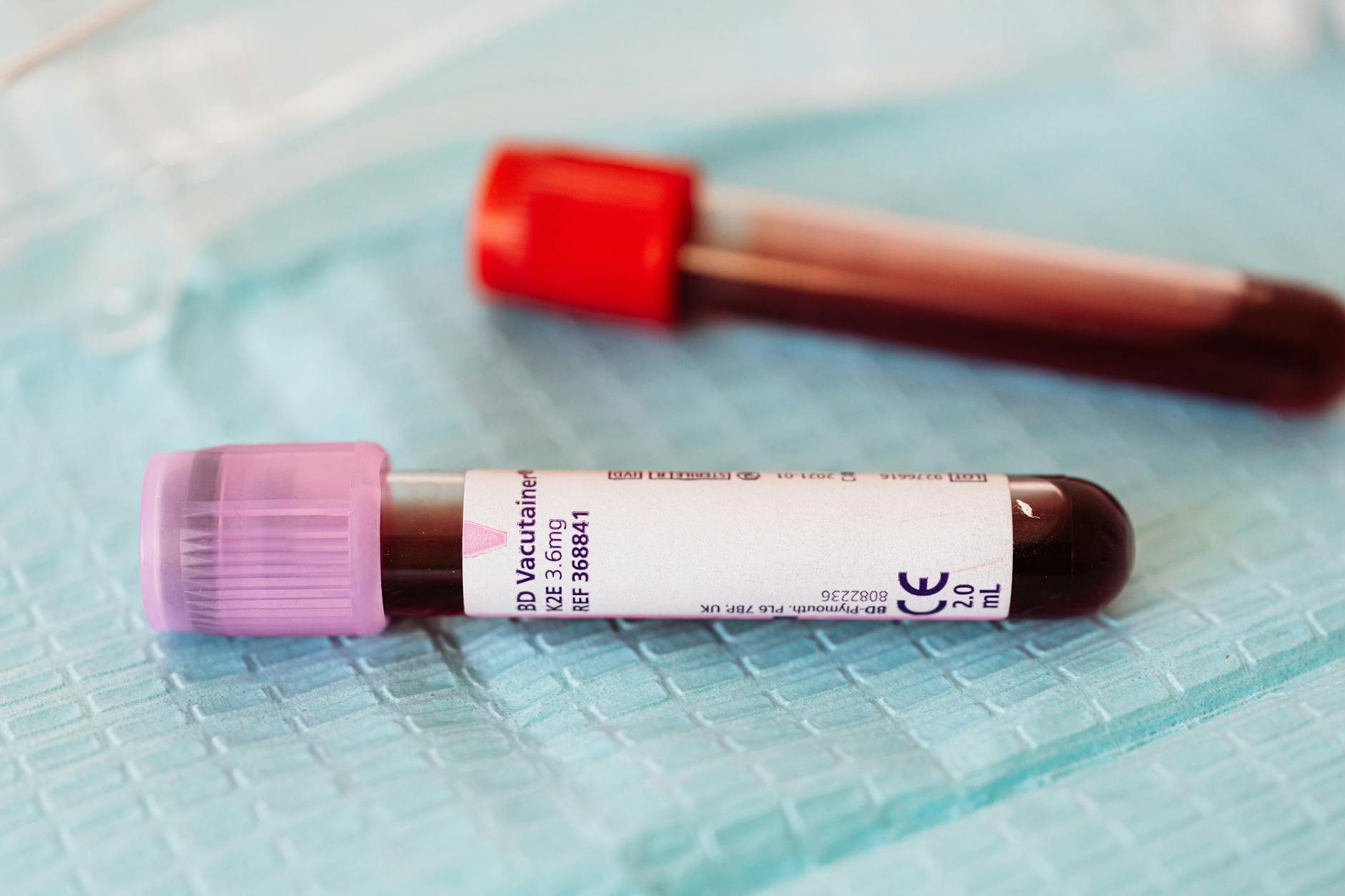
The Miracle of DNA: Finding a Killer

Photo by Karolina Kaboompics on Pexels.com

I am addicted to True Crime stories. Dateline, 48 Hours, podcasts like Crime Junkie and Dark Downeast are devoted to the topic. And I love them all. Some of these shows wrap things up very nicely: Crime happens, investigation ensues, suspect is identified, suspect is tried and convicted. That’s a very satisfying ending. Of course it’s also interesting when multiple suspects are identified and questions linger as to who the actual perpetrator is. Then there are the cases where an actual suspect is named but prosecutors don’t feel there is enough evidence to arrest and convict. Or maybe there just isn’t enough evidence to even name a suspect. These last cases often go cold, and remain unsolved for decades, or forever.

But there is hope, and it most often comes in the form of forensic science–the use of scientific methods to investigate crimes. Some examples of forensic science include fingerprints, bloodstain patterns, firearms, ballistics, fire analysis, and toxicology.

But perhaps the most influential is DNA.

The molecule DNA has been known since 1869 when it was identified by Johann Miescher. Following his discovery, numerous scientists were involved in linking DNA to its role in genetics.  Then, in 1953, Watson and Crick would begin the mapping that we now hear about today. In the 1980s, wider use of DNA testing exploded onto the world scene when Sir Alec Jeffreys developed techniques for genetic DNA fingerprinting–aka DNA profiling– that led to a whole new field of forensic science and a process that is critical nowadays in crime solving.

We all have DNA in nearly all the cells of our body. Interestingly, 99.9% of our DNA is identical to all other humans. So it’s in that .1% that the variations occur that make us unique, and enable us to clearly identify an individual. DNA Fingerprinting is the method of isolating and identifying those variable elements. In this way, DNA fingerprinting is much like traditional fingerprints, in that everyone has a unique profile.

The analyzing of DNA has several practical uses, like paternity testing and genealogy, as well as determining susceptibility to certain diseases. Advanced DNA testing has even allowed researchers to identify mutations in rare genetic disorders that have led to targeted, more effective treatment options for individuals. DNA is most frequently collected from various bodily elements including blood, semen, saliva, urine, feces, hair, teeth, bone, tissue and cells.

But we most often hear DNA in relation to crime solving. One of the first cases using DNA to identify a perpetrator involved Colin Pitchfork, who raped and strangled two young girls—Linda Mann and Dawn Ashworth—in 1983 and 1986, leaving behind semen in both cases. He ultimately became the first person in history to be convicted in 1988 of rape and murder using DNA analysis. In a more recent resolution earlier this year, Anthony Scalici was arrested on a second-degree murder charge in the 2009 killing of his uncle Rosario Prestigiacomo. Detectives from New York and Florida had been watching him for weeks, waiting for a chance to get a sample of his DNA, and were finally successful when Scalici discarded a used fork. DNA from the fork was analyzed and was later matched to blood from the murder scene and DNA found under the deceased’s fingernails.

In addition to identifying new suspects, DNA has also recently garnered favor by providing evidence of innocent individuals who were wrongly convicted. One such case in 1999 involved Kirk Larkin who was exonerated after spending 16 years in prison for a rape he did not commit. DNA testing not only proved his innocence, but also led to the identification and conviction of the true criminal.

DNA has continued to advance over the years, allowing proper profiles to be obtained from smaller samples, different types of samples, and older, degraded samples. Technological advances have also made DNA profiling faster, and more affordable, than prior testing mechanisms.

One critical element to the success of using DNA fingerprinting to identify a victim or criminal: There must be two samples to match against one another: One being a suspect’s DNA and the other a sample from a crime scene. But what if we don’t have a suspect? In this case, the crime scene DNA would be compared to CODIS, the FBI site of DNA samples from convicted felons, to determine if the perpetrator is already in the national database. But if the perpetrator has never been convicted of a felony, then their DNA would not be present in CODIS and a match cannot be made. Until recently, these cases would go cold.

Enter Forensic genealogy. The premise of forensic genealogy is that family members share enough DNA similarities to be able to identify biological family members. In forensic genealogy, the DNA obtained from a crime scene is analyzed, then compared to a public genealogy database, like Ancestry.com, where people have voluntarily entered their DNA, most often in an attempt to locate family members. When this happens, an exact match is unlikely, but sometimes close matches can be found that determine some level of familial relationship with the murderer. The testing is so advanced, that it can even determine the level of familial relationship. For example a close relative, like a brother, or a more extended relationship, like a distant cousin. Genetic genealogy is also often used to identify Jane and John Does–unidentified murder victims.

Genetic genealogy was used in the highly publicized case of the Golden State Killer. In the 1970s and 1980s, an unknown individual was suspected of at least 13 murders, as many as 50 rapes, and numerous burglaries. After decades with no arrests for the crimes, advances in DNA led law enforcement to turn to genetic genealogy. They entered crime scene DNA into a public database and got a match to what was likely a third cousin of the suspect. From there they recreated a family tree, and used investigative procedures to rule family members out based on physical attributes provided by witnesses to the crimes, as well as other strategies like who was physically in the area at the time of the crimes. This lengthy process led to the 2018 arrest of Joseph DeAngelo, who later pled guilty to 13 murders.

An even newer, interesting element of DNA forensics is phenotyping. In phenotyping, scientists use a person’s DNA to determine physical characteristics like eye color, skin color, ancestry, facial shape, height, and freckling. Using this information they can create a profile, and from that, pharmaceutical companies have begun compiling features, and eventually a “picture” similar to a sketch that might be created by a police sketch artist based on a witness’ description of a potential suspect. In one such case, after several body parts (a hand, and later a foot and rib cage) washed up on the rocks in Brooklyn in 2015, with no leads as to the identity of the victim, police used phenotyping to develop a picture of what the deceased person might look like, in the hopes that someone might recognize them and lead to an identification. The process has also been used to attempt to identify suspects.

There is a lot of debate over the usefulness/fairness/legality of using phenotyping. Detractors question its accuracy and fear it could lead to arrests of innocent people, based solely on a close likeness. Indeed, there have been individuals who have been questioned, who were later released after DNA to DNA comparisons were made, eliminating the individual as the perpetrator. And the phenotyping process is very expensive: $4000-$5000.

DNA testing is not a magic solution. Some potential limitations and drawbacks include: Environmental factors such as heat, sunlight, bacteria and mold destroying DNA evidence, DNA being unable to determine WHEN the suspect was at the crime scene, Lack of sufficient samples, Expense, contamination, and fraudulent transfer of DNA can sometimes affect accuracy.

But the number of cases that have been solved using DNA evidence are countless. This includes suspect identification, victim identification, and suspect and convicted suspect exoneration. If you’re a family member of a victim, or of a wrongly convicted suspect who was later cleared, you are likely very relieved that DNA brought about a resolution. In the world of crime solving, DNA is still the best weapon we have.

What I’m Reading Now: The Thursday Murder Club

Book: The Thursday Murder Club

Author: Richard Osman

Fiction/Nonfiction: Fiction

Have I Read This Author Before: No

One Sentence Summary: A Group of older individuals living together in a nursing home type facility in the UK become involved in a murder investigation when someone they know is murdered and they soon are doing a better job solving it than the local police

Did It Make Me Want to Keep Reading: Yes

Best Thing About the Book: Very funny but also a good mystery with lots of suspects and components; a very fast read

Worst Thing About the Book: The number of characters and story lines (both past and present) sometimes made it difficult to remember all of the components

What I Learned: Many British terms as I was often googling when I came across something I didn’t know: Spanner (wrench), wpc (Woman Police Constable), Stone (about 14 pounds) to name a few

The Bottom Line: After being enmeshed in intense thrillers for the last several months, this offered some of that mystery with less gore and more laughs

Would I Read This Author Again: Yes

Next Book to be Read by This Author: We Solve Murders