What I’m Reading Now: We Need to Talk About Kevin

Book: We Need to Talk About Kevin

Author: Lionel Shriver

Have I Read This Author Before: No

Fiction/Nonfiction: Fiction

One Sentence Summary: In the form of letters to her husband, the mother of a school shooter and mass murderer recalls their lives leading up to the horrific event

The Best Thing About the Book: Although a very sad topic, it’s interesting to get the perspective of the murderer’s mother; also the book is very well-written

The Worst Thing About the Book: The sad topic makes it difficult to read at times and some of the shooter’s comments can be a little tough to hear

Did it Make Me Want to Keep Reading: Yes

What I Learned: Although the story is fiction, the book does reference some similar real-life tragedies and I learned some details about those situations that I had not known; also it’s a reminder of just how prevalent this kind of murder is

The Bottom Line: A very dark look at a tragic event including other’s reactions and questions about who is to blame; about 3/4 of the way through I thought I knew the whole story and was wondering what was left to learn but there were still surprises to come

Would I Read This Author Again: Yes

Next Book to Be Read by this Author: Big Brother

What I’m Reading Now: Dead I Well May Be

Book: Dead I Well May Be

Fiction/Nonfiction: Fiction

Author: Adrian McKinty

Have I Read this Author Before: No

One Sentence Summary: We follow the adventures of a young immigrant from Ireland who is brought to NYC by a cousin and inaugurated into an organized crime ring that exposes him to experiences including drugs, extortion, murder, disappearances, and a brutal stint in a Mexican prison

Best Thing About the Book: Great writing and although I am not knowledegeable about organized crime, nor is it my typical reading material, the book was engrossing and rang true; very little “telling” and lots of “showing”

Worst Thing About the Book: It took me awhile to get into it; the beginning introduces many characters and I struggled to keep them all straight. Midway through the book it gets easier with fewer characters

Did it Make Me Want to Keep Reading: Yes and No. It was difficult for me at first, but about midway through the book it really caught my attention and was hard to put down

What I Learned: So much that I never needed to know! It’s definitely graphic and disturbing at times; one example: Our narrator participates in a Belfast six-pack, which involves shooting a victim 6 times (ankles, knees and elbows); he survives but probably wishes he didn’t

The Bottom Line: A very engrossing book that frequently made me cringe but at at the same time I wanted more

Would I Read this Author Again: Yes

Next Book to be Read by this Author: The Cold Cold Ground (the first in a detective series)

The Way I Want to Be

Photo by Andrea Piacquadio on Pexels.com

I sometimes struggle with two theories about the best way to live a satisfying life. The first camp suggests that we achieve peace by practicing gratitude. The argument for being grateful is pretty straightforward and compelling. When we stop and think, most of us have everything we really need. A home, a job, our health, food on the table, perhaps a family and a supportive social network; all the basic necessities for happiness. We know that there are so many less fortunate people than us in the world. Homelessness, hunger, disease, war, persecution, and lack of human rights are all alive and present in our world. And yet we’ve become so used to complaining. Over the weekend a car was rudely beeping when another car tried to pull in front of him within merging traffic. This morning I saw someone get impatient when having to wait in line. And all of us have gotten frustrated when the extra cream, mocha latte we ordered wasn’t prepared correctly. Reading this, we probably all see how silly it is to complain about such minor things.

There is abundant research regarding the link between practicing gratitude and happiness. In one study, Group One wrote a gratitude letter to another person every week for three weeks. Group Two wrote down their thoughts about negative experiences, and Group Three did nothing. All three groups received counseling. After twelve weeks Group one still reported significantly better mental health (Wong and Brown, 2017). In another study, participants were asked to write down their gratitude items for 21 days. A the end of the 21 days they reported feeling more optimistic, less anxious, and better rested both immediately after, and for three to six months after the study. And its not just mental health that benefits. In a 2015 study (Huffman, Beale, Beach, Celano, Belcher, Moore, Suarez, Gandhi, Motiwala, Gaggin, Januzzi) patients who expressed optimism/gratitude had healthier hearts two weeks after a coronary event.

And the benefits of practicing gratitude go on:

  • Acknowledgement that there is goodness in the world and that you are the beneficiary of that goodness
  • Becoming less materialistic
  • Less likely to experience burnout
  • Better physical health
  • Better sleep
  • Less physical inflammation
  • More Patience and greater resiliency
  • Redirect of focus from toxic, negative emotions
  • Trains our brain to look for the positive

All of this makes sense to me. And its easy to get started. You don’t need money, equipment, or training. Just a little bit of time. There are many free apps you can download for suggestions, but even that isn’t necessary. Here are some ideas.

Ways to Practice Gratitude:

  • Meditation: Download a free app or youtube video
  • Keep a Journal
  • Write a Letter
  • Recognize a moment of happiness or kindness and take a moment to appreciate it
  • Say thank you to others and be specific about what you’re being thankful for

The second theory about how to achieve happiness and satisfaction in your life seems almost contradictory to the gratitude theory. This one states that we should never be satisfied with less than what we have always wanted or perhaps what we deserve. Accepting “less” often translates to a word with very negative connotations: Settling. Believers of the “never settle” theory claim that settling will lead to negative results, including:

  • Lower happiness/life satisfaction
  • Having regrets
  • Wishing things were different
  • Feeling that you aren’t living up to your potential
  • Looking back on your dreams and feeling disappointed

What is wrong, the non-settlers would argue, with continuing to seek a better job, car, house, partner? Aren’t we just settling if what we have is not the best that we want or deserve? Clearly settling is always bad. Or is it? According to Oxford, the definitions of “settle” are as follows: 1. resolve or reach an agreement; 2. pay a debt or account; 3. adopt a more steady or secure way of life. Interestingly, none of the connotations of what we think of these days which in essence is “being satisfied with less than you deserve.” In fact, the definition of adopting a more steady or secure way of life sounds pretty positive. Should we always chase our dreams, or should we be grateful for what we have? When, if ever, is it okay to “Settle?” and When is it bad to settle?

We make decisions like this on a daily basis, even for minor issues. We make the decision based on comparing two possible outcomes. For example, should I pack and bring my lunch to work, or should I go to MacDonalds? The first option might be less expensive and healthier, but option 2 might offer more enjoyment while eating. The decision that is reached will likely be different for different people. So when might settling be a problem that will lead to lower life satisfaction?

You might be “settling” for less happiness if:

  • You find you are always complaining
  • You wake up in the morning and dread going in to work
  • You have people in your life but are still lonely
  • You are putting up with a dangerous situation (abuse, alcoholism, etc)
  • You frequently feel unhappy or anxious about situations in your life
  • You are not acting because you are afraid of failure

I recently read an article about settling in which the author claimed that there are always better options out there. This did not ring true to me. I feel there has to be some element of reality. Does it make sense to decide in your later years that you want to be an actress and you have not had any training, and do not have any exposure to people who might make this dream a reality? Leaving a stable job and moving to LA in this instance might not be the best idea. And even if it’s true that there is always a better option, then won’t we always be chasing something better? When is it safe to be satisfied and be grateful for what you already have?

So which of these two practices is going to lead to more happiness? I propose that these two trains of thought, both with great supporting arguments, can live simultaneously. Certainly practicing gratitude offers benefits that we can all enjoy. The thing about gratitude is, you get to decide what you’re grateful for. So you can be grateful for the fact that you have a job and are not struggling financially, while still taking some steps toward accomplishing the dream job. Or maybe the dream job is out of reach, for one reason or another. It’s okay to adjust your dreams, based on your current situation. If we never altered our dreams, we would all still be hoping to be Rock Stars or Super Heroes! I, for example, have a day job working in a bank. I’ve been in banking for over 30 years and the industry has provided me and my family with a stable income, some level of advancement, and many benefits that give me peace of mind. It’s not my dream job, but I get to experience my dream of writing by talking to you through this blog. In this way I’m able to incorporate both my practice of gratitude, and the pursuit of my dreams.

Ultimately, each of us has to decide for ourselves. Like many of life’s choices, this one does not have the same answer for everyone. And, I think, like many other lifestyle choices, it comes down to balance. For you, health may be most important, while for someone else it might be wealth, or for someone else it might be strong social relationships. Whatever is most important to you right now, you can probably find something in your current situation to be grateful for. And also something you can still strive for. I think that utilizing both strategies is sure to lead to greater happiness.

This is How I Want to Be.

Can I Build Muscle with Just My Body Weight?

Photo by Nathan Cowley on Pexels.com

The short answer: Yes.

Body weight training is just how it sounds. You aren’t using any external weights like dumbbells or free weights. Your body alone provides the resistance to work your muscles. Some popular examples include squats, planks, and pushups. These exercises do build your muscles, and for many of us, who are trying to tighten, strengthen, and benefit from the many health benefits of building muscle, this can be enough.

Simply put, Muscle size increases when you continually challenge your muscles to lift, push or hold resistance or weight. This process is known as muscle hypertrophy. So when your body struggles to hold you in a plank position, your shoulders, abs and legs are all working hard and with repeated work, muscles get larger.

All strength training has benefits, whether using body weight or external weights. Some positive outcomes include:

  • Helps support your joints
  • Helps maintain healthy blood sugar
  • Improves your heart health
  • Enhances your brain health
  • Reduces Stress
  • Improves confidence
  • Strengthens your immune system
  • Improves energy
  • Helps manage body fat
  • Reduces risk of injury
  • Increases ability to perform physical tasks
  • Strenthens your bones

Training using only your body weight has some additional benefits:

  • You don’t need any equipment, so you can do it any time, anywhere, with no expense
  • Body weight tends to be safer as the tension needed to hold weights can lead to injuries like tears in muscles or ligaments, as well as muscle sprains and joint pain
  • There is often more flexibility with movements when using body weight. If you’ve incorporated these into your workouts, you know that there are many different versions of planks, squats, and sit-ups. There is less variety with weight bearing exercises
  • Many weight bearing exercises work multiple body parts, requiring fewer moves and less time
  • Bodyweight moves help improve balance and coordination

Here are some body weight exercises that are popular:

  • Biceps: chinup and pullups
  • Triceps: chinups, dips
  • Chest: pull ups, pushups
  • Shoulders: pushups, planks
  • Back: chin ups, pull ups, dips
  • Legs: squats, calf raises, lunges
  • Abs: crunches

Its easy to see from this list that many body weight exercises use multiple muscle groups.

If you want to continue to build muscle mass with your workouts, you would have to continue to challenge your muscles. To do this using body weight you can increase reps and/or intensity, i.e. working faster or longer. But at some point you will see your results plateau, as you hit a ceiling with the amount of challenging you can do with body weight alone. If you’re happy with your progress, the good news is that you can maintain your muscle by continuing with the body weight exercises. However, if you want to continue to grow your muscle mass, you will need to use weights.

Incorporating weights into your workout also has some unique benefits. Some benefits of weight bearing exercise:

  • Continuing to challenge your muscles by increasing weight, means continued muscle growth
  • Strengthen your bones, reducing risk of osteoporosis
  • increase your muscles ability to use glucose, which aids in preventing diabetes, and help normalize levels of insulin, possibly assisting with fat burning
  • Strengthens tendons and ligaments, which can carry over to other activities like running
  • Faster results
  • It’s easier to tell when you’re improving/getting stronger as increase the amount of weight
  • Greater assistance if athleticism in a different area is a goal (i.e. basketball, tennis, ice skating)

The decision to use body weight or actual weights will not be the same for everyone. It clearly depends on your goals, and how much time and equipment you have. Many professional athletes incorporate both types of exercises into their workouts, and this may be the best idea as doing so will ensure you take advantage of all of the benefits of both types of workouts.

What I’m Reading Now: Mrs. Everything

Book: Mrs. Everything

Author: Jennifer Weiner

Fiction/Nonfiction: Fiction

Have I Read This Author Before: Not that I remember

One Sentence Summary: The book follows the lives of two sisters taking different paths beginning with their childhood in the 1960s until the current day

Best Thing About the Book: There were a couple of scenes that felt real and a little heart-wrenching

Worst Thing About the Book: The book followed a repetitive pattern of skipping ahead for a few years and then recapping what had happened in the interim; it felt like she was constantly summarizing the action

Did It Make Me Want to Keep Reading: No, I was never anxious to pick it up and there were no real surprises

What I Learned: Not learned exactly, but most of the book takes place during the 60s and there are some reminders of blatant racism and lack of women’s rights

The Bottom Line: The story meanders through the sisters lives with a lot of oversimplified scenes that are meant to be life-changing but just don’t ring true; I never felt connected to either of the characters or their journeys; I often found it predictable and cliche

Would I Read This Author Again: No

Next Book to be Read by This Author: None

What I’m Reading Now: The Stranger

Book: The Stranger

Author: Harlan Coben

Fiction/Nonfiction: Fiction

Have I Read This Author Before: Yes

One Sentence Summary: A stranger approaches various, unrelated strangers across the country and tells them secrets about the people in their lives that will change their world forever

Best Thing About the Book: This was very different from the previous Harlan Coben books I’ve read in the past; less blood and murder, but creepier in its highly personal nature

Worst Thing About the Book: Some of the conversations are frustratingly circular (Her: “Do you know who she is, yes or no?” Him: “I think I do.” Her: “Who is She?” Him: “You don’t know?”)

Did it Make Me Want to Keep Reading: Yes

What I Learned: I read the acknowledgements at the back of the book, which I never do, and learned that Harlan Coben accepts donations from individuals to use their names in his books, and then donates that money to charity; very cool!

The Bottom Line: Definitely a page turner as various, seemingly unconnected plot lines start to come together in typical Coben fashion with plenty of surprises

Will I Read This Author Again: Yes

Next Book to be Read by This Author: Play Dead

Taking a Break From Grocery Shopping

Photo by Lina Kivaka on Pexels.com

The conversations are happening in offices and homes everywhere across the country. The prices of everything have gone up. We’re all thinking about where we can cut corners. In my household we’re reviewing things like cable/streaming expenses and oil companies for our heating costs. I recently challenged myself to save money by purchasing zero food items for one week. Aside from keeping some extra dough in my checking account, I know that I actually have a lot of food in my cupboards already. Much of it is non perishables, but also some fresh produce that would probably end up getting thrown away when I push it aside for a quick trip to the grocery store.

I enjoy looking at recipes and trying new things out. I will often pick up ingredients at the grocery store for these new test items, but they don’t always make it to the oven. This is partly because I like ease and quickness when I have to come up with a family dinner at the end of a workday, so I often opt for a meal that requires few ingredients and is easy to prepare. I also order from subscription meal kit services like HelloFresh and EveryPlate, which provide all the ingredients for a complete dinner, requiring me to only open a bag and start assembling a meal. This is a great time-saver, but it sometimes means those new ingredients I purchased go unused.

So I decided to boycott the grocery store, and my online meal delivery kits, for a week, to see if I could save some money, and also use up some of those ingredients taking up space in my pantry and fridge. I share cooking duties with my boyfriend, so my obligation was to come up with 4 dinners for the week, as well as making sure my 2 kids still had some options for lunches and snacks.

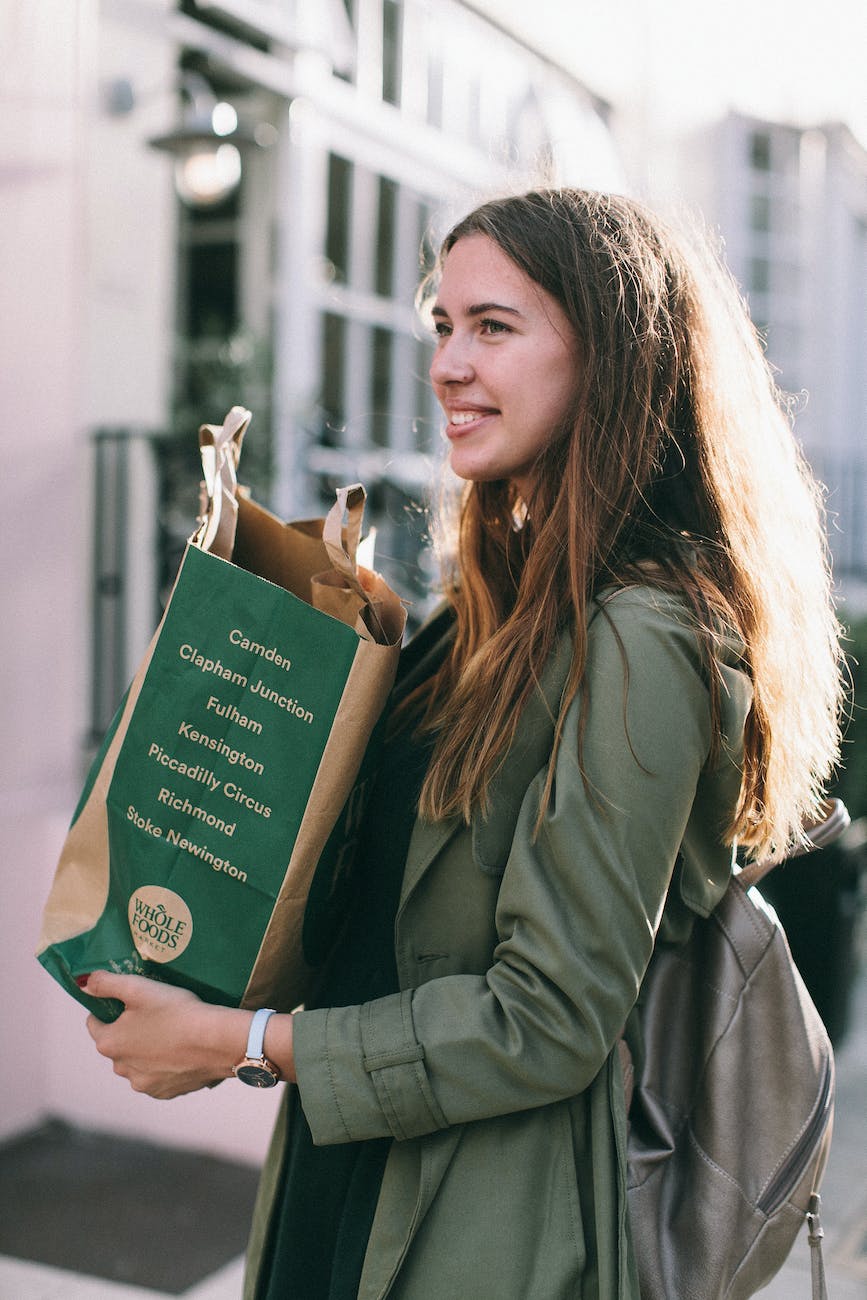
I started by tracking how much I actually spend on food each week. I should mention that I refuse to push a carriage in a grocery store. I just don’t like it. This means that I go in with my reusable shopping bag and once that is full, I’m done shopping. Therefore I may shop more frequently than some of you. I am probably in the store 2-3 times per week, as opposed to doing one big shopping trip each week. I explain this in case it seems odd that I didn’t know how much I spend weekly. I truly didn’t. After crunching a couple of month’s worth of numbers, I determined that I average approximately $152 on food each week between trips to the store and delivered meal services. This figure did surprise me in that I expected it would be less. After all, my kids are 19 and 20 and aren’t at home as much as they used to be. It’s probably an average amount for a family of 4, but the thought of keeping that sum in my pocket was very appealing.

The next step was to plan. So I went on a tour of my kitchen. I started with my pantry where I discovered quite a few options that would make for a complete dinner: Meal kits for Tiki Masala, hamburger helper, A chow mein mix, a risotto mix, Pastas and sauces, rice, and lots of seasoning mixes for meal prep (pot roast, chili, sloppy joes, fried rice). I also have a decent supply of boxed crackers, canned tomatoes, soups, corn, and black beans. Most of these can easily be converted to a meal or snack with other ingredients I already have at home.

In the freezer I located boneless chicken, ground beef, pork chops, bacon, several varieties of vegetables, and bread. In the fridge, fresh spinach, carrots, peppers, onions, and cheeses and eggs. I was feeling pretty good about my chances to be successful.

Next, I Cancelled my subscription services, Hello fresh and Everyplate, for the week.

Then it was time for meal planning.

Tiki Masala and hamburger helper were pretty much ready to go. Just add meat. The chow mein I would normally serve on hamburger buns, which I did not have, but I could easily substitute another type of bread for chow mein sandwiches. I could easily make omelettes with peppers, onions and cheese, or prepare bacon and eggs. Pasta and sauces is easy enough. I didn’t really have the makings of a salad, but I could add a frozen vegetable, or fresh spinach or carrots to a pasta meal. I could use the ground beef and seasoning sauce to make chili, adding my onions and peppers. I didn’t have the traditional kidney beans, but could substitute black beans. I could make the fried rice the star of a meal and add in vegetables, eggs, and/or chicken.

Satisfied that I had plenty of meal options, I finalized my weekly dinner plan, making the necessary substitutions and made note of lunch options that included peanut butter and jelly sandwiches or soup, as well as cheese and crackers, and carrot sticks, and sat back to enjoy my extra time (no trips to the store) and extra cash in my pocket.

I’m happy to report that the challenge was surprisingly easy. In the end I went with the Tiki Masala (adding grated carrot), chili, pasta with sauce and a side of spinach, and omelettes with peppers and onions. The meals went off without any problems and it felt good to not be stopping at the store on my way home from work and also to use up some of the items that had been sitting around my kitchen. Even items that feel like a “must-have” (in my house that’s milk, lunch meat, ramen, crackers), were not really missed for the week by simply substituting something we already had. And my family never even noticed! I’ll definitely be challenging myself with this one again. Here is a summary of the steps to take if you’d like to try this challenge for yourself: 1. Take inventory of what is already in your home 2. Plan your dinners, lunches, snacks etc for the week 3. Save money!

If this particular challenge seems too difficult for your household situation, try challenging yourself with whatever eats up a lot of your disposable income. Eat out multiple times a week? Make it through a week with just at-home meals. Playing the lottery regularly (and who isn’t?)? Stay away from the quickpicks and scratches for a week. Dunkin donuts addict? Brew at home. You get the picture.

Let us know how you challenged yourself and whether or not it was successful!

The Best Medicine

Photo by Reafon Gates on Pexels.com

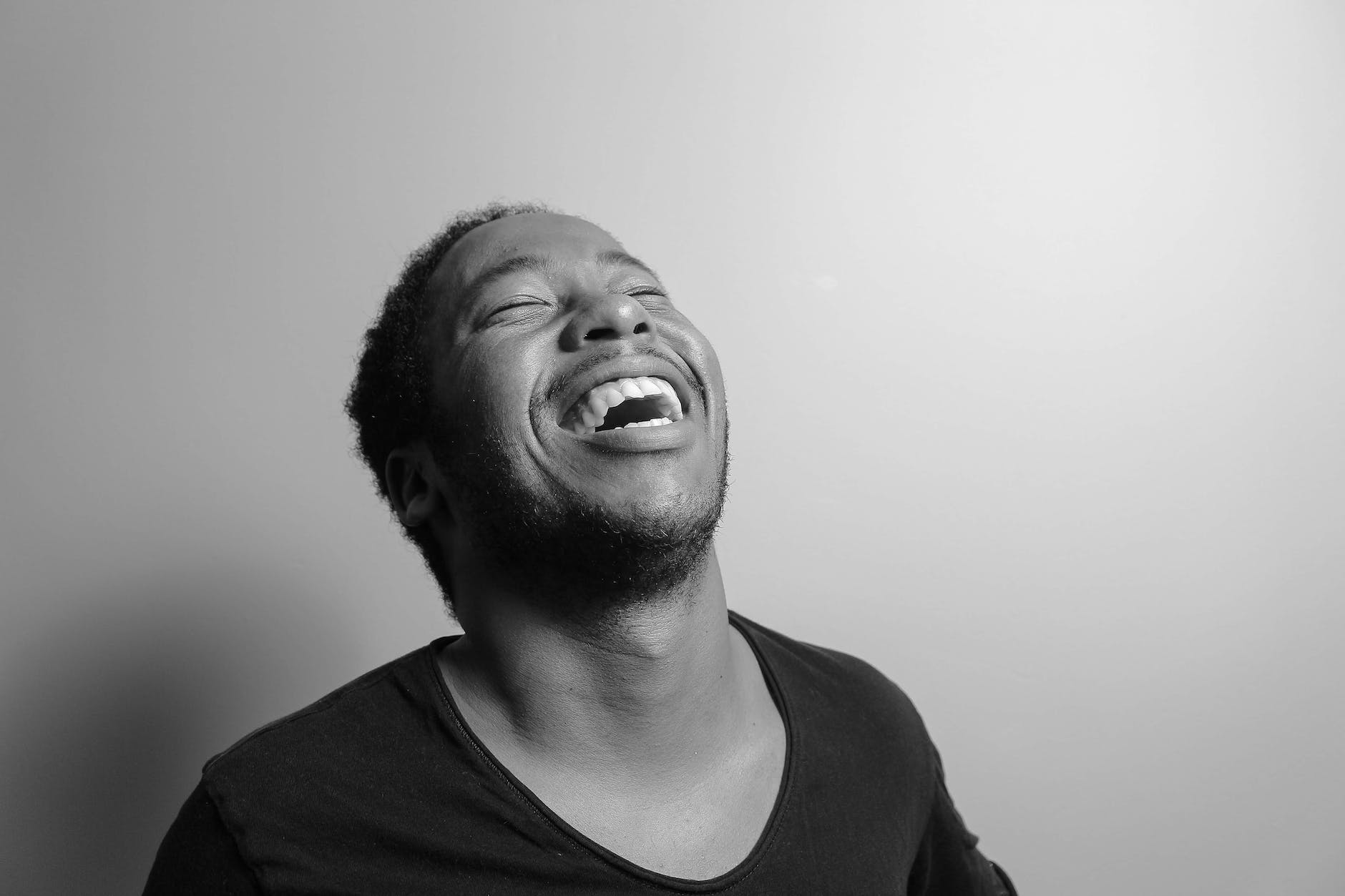
When was the last time you laughed? I’m not talking about a snicker when you hear a funny joke. I mean when you laugh so hard that you can’t talk. When you laugh so hard you cry. When you laugh so hard you can’t even catch your breath, and maybe liquid flies out of your nose.

I remember the last two times, as they were recent.

A couple of weeks ago I met my tribe for dinner. There are 7 of us total, friends for 40+ years. Regular meetings are our religion and our therapy.

When we get together, we catch up on everything that’s happened since we last met. Weddings, babies, new jobs happening in our kids lives. Complaints about work and When can we retire? Everyone has a funny story to share, and often we will just add pieces to it (What if you had said this? Why didn’t you just do this?) until the laughter bug catches us and then we’re out of control with the laughter. Usually, I don’t even remember exactly what we were laughing about. I just remember the feeling of thoroughly enjoying the moment.

The second recent time of laughter was with some family members as we celebrated my mom’s 80th birthday on a sleepover adventure out of town. At the request of mom, we were having a game night and one game required you to give answers quickly. As the game wore on, our answers got sillier and sillier until eventually that uncontrollable laughter started. And once it starts, it is so hard to stop! Laughing is fun. Laughter just. . . well, it just feels good.

Research shows that laughter has many health benefits, both physical and mental. These include pain relief, better immunity, and more happiness. Laughter reduces the level of stress hormones like cortisol, epinephrine, and dopamine, and increases the “good” hormone endorphins. It increases the number of antibody-producing cells working for us. It makes us feel better by distracting us from anger, stress and negative emotions and helps us view challenges in a less threatening way. Laughter releases stress in our bodies and causes us to relax. It even protects your heart by improving blood flow.

Perhaps best of all, laughter provides a feeling of connectedness to the people around us, promoting group bonding, enhancing teamwork, and strengthening relationships. And it doesn’t have to be the out-of-control laughter to reap these benefits. Simple laughter at a good joke or silly face will also get your blood pumping and change your outlook on the day. Wow, all of this, and its fun too!

Sadly, we appear to lose the ability to laugh as we get older. Studies suggest that as children, we laugh up to 400 times per day. As adults, only 15. It seems to make sense that we would want to try to cultivate this phenomenon to take advantage of the many benefits of laughter.

Getting together with loved ones is often a recipe for laughter success. Sharing stories from your past in a loving environment will bring up good memories and a chuckle. So as you’re gathered around the Thanksgiving table, ask each guest to share a funny memory from a prior holiday get together, or childhood, or family vacation.

You’ve probably heard that laughter is contagious. I’ll bet you can think of a friend with a genuine laugh that always makes you smile or laugh along. The contagious feature of laughter is why TV sitcoms use laugh tracks.

Here are some more ideas to get more laughter in your life:

  • Start with a smile
  • Watch a funny movie
  • Go to a comedy show
  • Host a party or game night
  • Try to laugh about minor problems instead of being frustrated
  • If you can’t laugh for real, pretend; the act of pretending will at least make you smile
  • Seek out laughter; at a social gathering or out in public; ask “what’s funny?”
  • Spend time with funny people
  • Ask a probing question: what’s the funniest thing that’s happened to you recently?
  • Tell and listen to jokes, and laugh even when you don’t find them funny
  • Incorporate “play” time: a toy on your desk, a funny poster or photo; skip, play pass, color
  • Keep a “laughter” bank of memories that you can think about when you need a pick-me-up

So get started today making new memories and improving your physical and mental health. And don’t forget to take your medicine!

The Order of your Exercises Matters. Probably.

Photo by Karolina Grabowska on Pexels.com

So maybe you’ve just begun a new exercise program, or maybe you’ve been exercising for years. Either way, good for you! It’s so important to our physical and mental well-being! Does your plan consist of cardio? Strength training? Both? Whatever your strategy, you may have wondered about the order of your exercises and whether or not it makes a difference. The answer is. . . It depends.

The question you need to ask yourself is, “What is My Goal?” The bottom line is that you have the most energy and strength at the beginning of your workout, so based on what you want to accomplish, you need to perform the high priority and/or more complex exercises first.

So if your goal is to improve strength and muscle, focus on those activities first. In one study published in The Journal of Strength and Conditioning Research, researchers compared the following workouts: only strength training, running then strength training, and cycling then strength training. The exercisers did fewer reps during their strength training exercises if they had just run or cycled vs doing their strength movements first.

And within your strength training workout, you’ll want to complete the exercises that require more strength and energy at the beginning. In most cases this means the more complex moves involving multiple body parts (for example, squats) before single body part moves (like biceps curls).

Now if your goal is to run a marathon, then you would do well to perform your running activity prior to your weight-bearing exercises, when your energy level is at its highest.

If your goal is simply to improve your overrall fitness, then the order doesn’t really matter at all. A recent study published in the journal “Medicine and Science in Sports and Exercise” determined that over the course of 24 weeks, participants gained the same increases in both muscle mass and aerobic capacity whether they began their workouts with strength training or cardio.

Here are some guidelines for prioritizing the different aspects of your workout:

  • When incorporating both cardio and strength training, start with the one that more closely aligns to your goal, as whichever you do first is probably going to get your best effort and yield the most results
  • Alternately, do your cardio and strength training on different days altogether
  • Do harder, more technical and/or full body movements before smaller muscle movements
  • If you want to show your smaller muscle groups some more love, try working them prior to a cardio workout, or by themselves on a rest day
  • Do exercises requiring the most energy first; think burpees before triceps extensions
  • If you’re working different body parts on different days, change up the order you complete your sets, as once again, the first exercise is getting your best effort
  • Do your core/abs last; many other compound exercises also engage your core, so you don’t want an exhausted midsection when doing your pushups
  • Work different body parts on different days (for example, chest, shoulders, biceps, then back, triceps, then legs, abs); by doing this and then alternating exercise order on each day, all body parts get a chance to get the most maximized workout

What I’m Reading Now: A Fatal Grace

Book: A Fatal Grace

Fiction/Nonfiction: Fiction

Author: Louise Penny

Have I Read This Author Before: Yes (Still Life)

One Sentence Summary: An unliked woman is murdered in an unusual way in a small, Canadian town, and Inspector Armand Gamache is called upon to solve the crime amidst multiple suspects

Best Thing About the Book: Character development and story lines keep the reader guessing and changing theories throughout anxious to discover the explanation for apparently bizarre circumstances

Worst Thing About the Book: Worry over whether she can maintain creative story lines in the next Gamache mystery

Did it Make Me Keep Reading: Yes

What I Learned: Some new french words like tuque (a warm, knitted stocking cap) and reveillon (a nighttime celebration held after midnight on Christmas morning)

The Bottom Line: Penny is a great storyteller weaving multiple story lines that all fall neatly into place by the conclusion

Would I Read This Author Again: Yes

Next Book to Be Read By This Author: The cruellest month